
The story behind Telangana’s housing scheme
Rajaiah Goud applied once. But Ibrahim Sheik applied twice. Once in 2016, once in 2018. Both times, officials from the Telangana government’s 2BHK housing scheme walked into his home, asked about his income, his family, his living conditions, and left. Both times, no allotment came.
“The officials came to my house twice, and enquired about our socio-economic condition and left, but I still couldn’t get a 2BHK allotment,” Ibrahim was quoted as saying in newspapers. By the time a new scheme called ‘Indiramma Indlu’ opened its doors in late 2023, Ibrahim didn’t bother applying. He had run out of hope. And Rajaiah is still undecided.
A house worth waiting for?
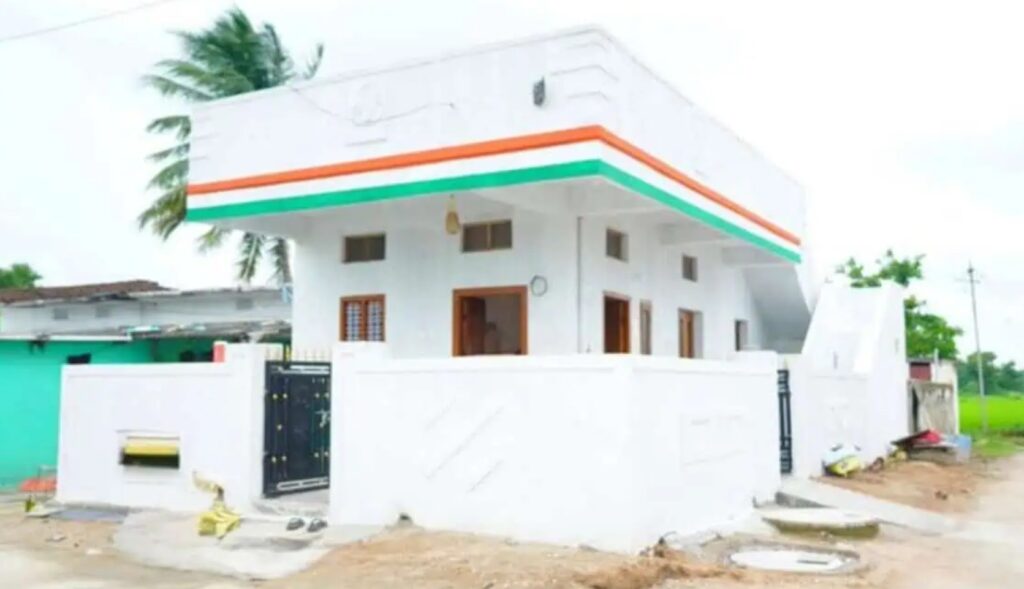
Lachchamma and Rukmini, who live in the same neighbourhood, applied anyway. They had enrolled during the Praja Palana drive that the Congress government ran after coming to power, a door-to-door exercise that eventually drew 80.54 lakh prospective applicants for various welfare schemes. That number alone says something about how many families in Telangana still don’t have a permanent roof over their heads.
This is the unglamorous story behind the State’s housing initiative, a scheme easy to reduce to numbers on a government release. But it is really about people like Ibrahim,
Lachchamma, and Rukmini, and the years they’ve spent waiting for an address that they can say with confidence and pride belongs to them.
A promise that had failed before
Telangana isn’t new to housing schemes. The previous government’s Double Bedroom Housing initiative had promised free 2BHK flats starting in 2015. According to Revenue and Housing Minister Ponguleti Srinivas Reddy, of the 1,52,000 houses that the scheme was supposed to deliver, only about 63,000 actually reached beneficiaries. That gap between promise and delivery is part of why the current government chose a different design altogether.
Instead of building flats and handing over keys, Indiramma Indlu gives families money and lets them build. Eligible households who already own land receive Rs. 5 lakh in financial assistance, while those without land are given a plot as well. The scheme was formally launched in Bhadrachalam,
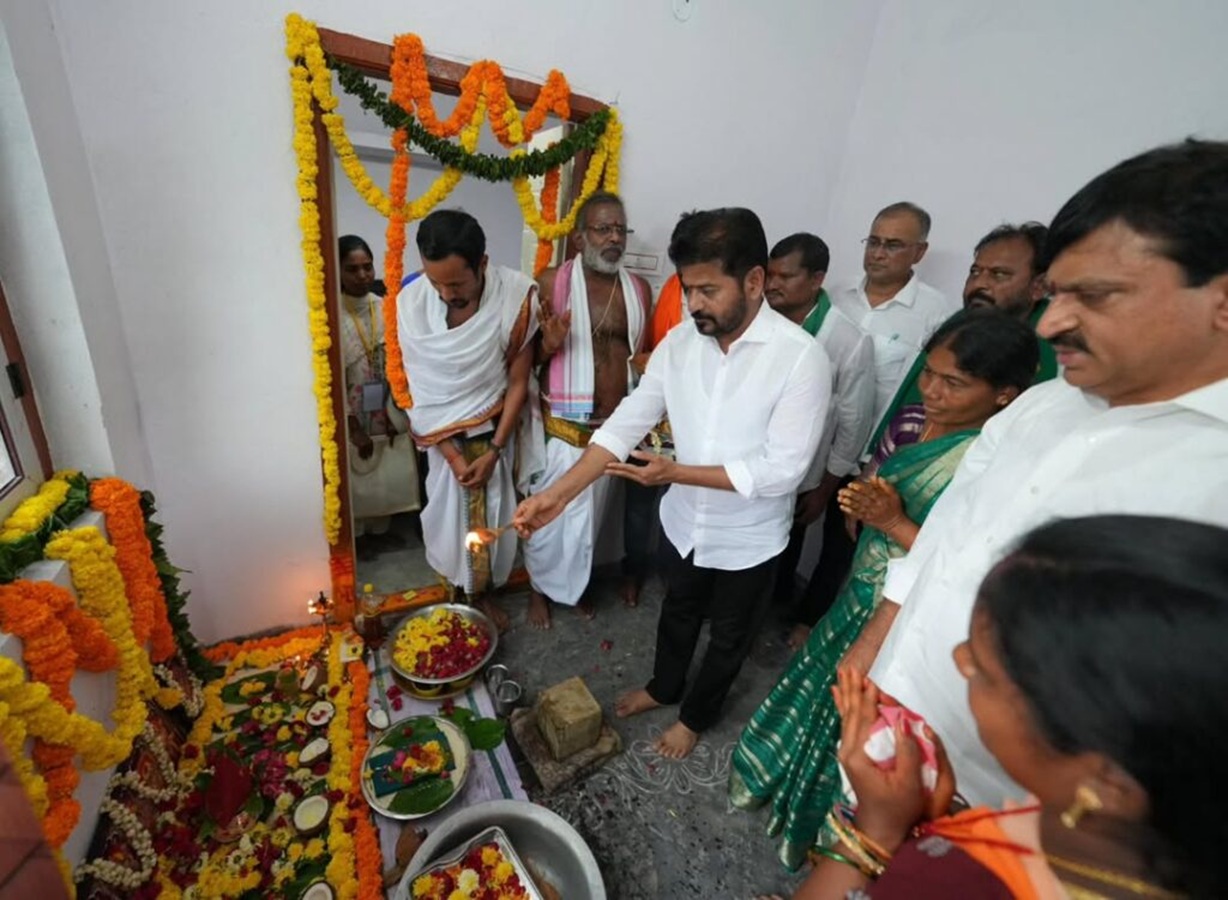
with Chief Minister A. Revanth Reddy invoking Lord Rama’s blessing for the occasion, and Housing Minister Ponguleti Srinivas Reddy declaring that the poorest among the poor would get benefits first, with everyone else to follow.
What the numbers actually mean
The government has sanctioned 4.5 lakh Indiramma Indlu at a cost of roughly Rs. 22,500 crore, with a minimum of 3,500 houses earmarked for each of Telangana’s 119 Assembly constituencies. The money doesn’t arrive in one lump sum. It’s released across four stages of construction, tied to how far a family has actually built, which keeps the funds honest and the houses real rather than paper entries in a ledger.
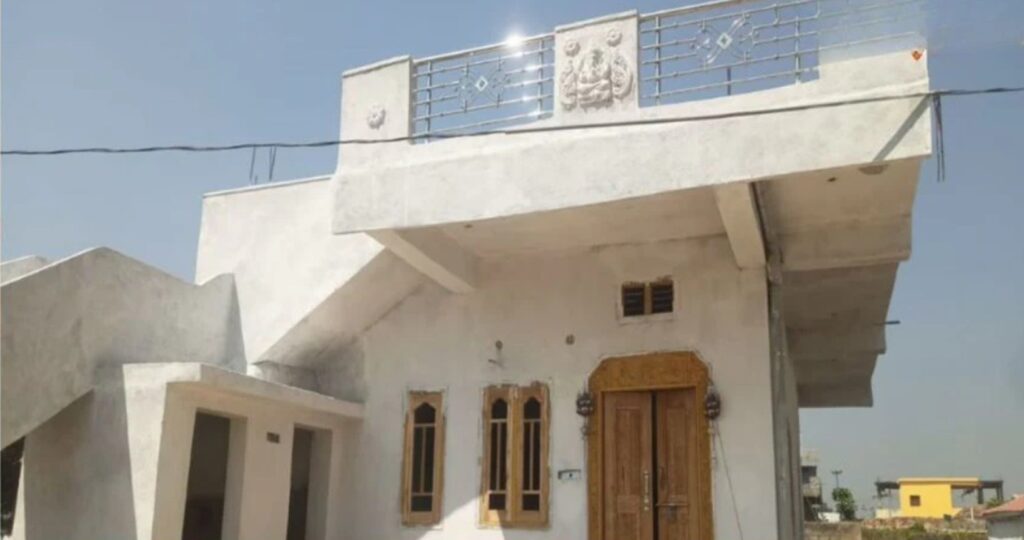
Every sanctioned house needs an RCC roof, a proper toilet, and a minimum liveable area. And for families squeezed onto very small plots, the government later relaxed rules to allow a first floor, so that a family doesn’t have to compromise on space just because the land is narrow.
Perhaps, the most consequential decision in the scheme’s design is who the house belongs to once it’s built. Ownership documents are issued in the woman’s name, which also, in a major way, shifts the asset – and the security that comes with it – to the person who is often the least likely to hold property in her own name in rural Telangana. So, going beyond making statements during speeches and rallies, the Congress government is walking the talk on women’s empowerment.
The proof is in the ceremony
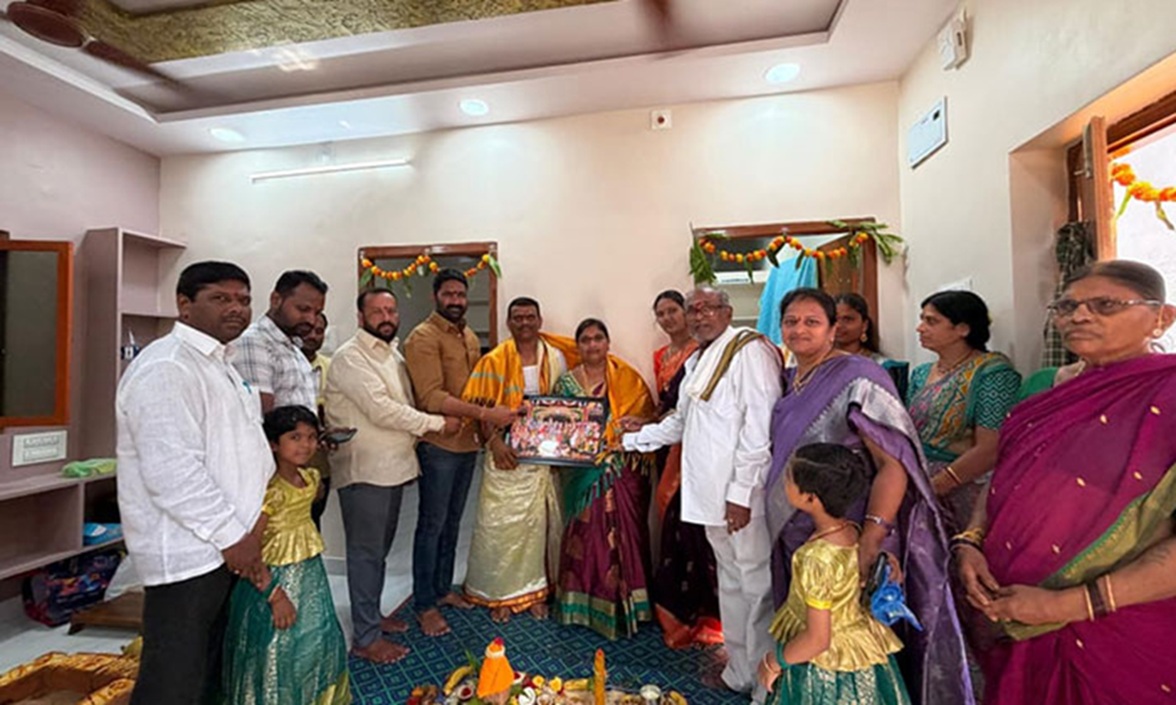
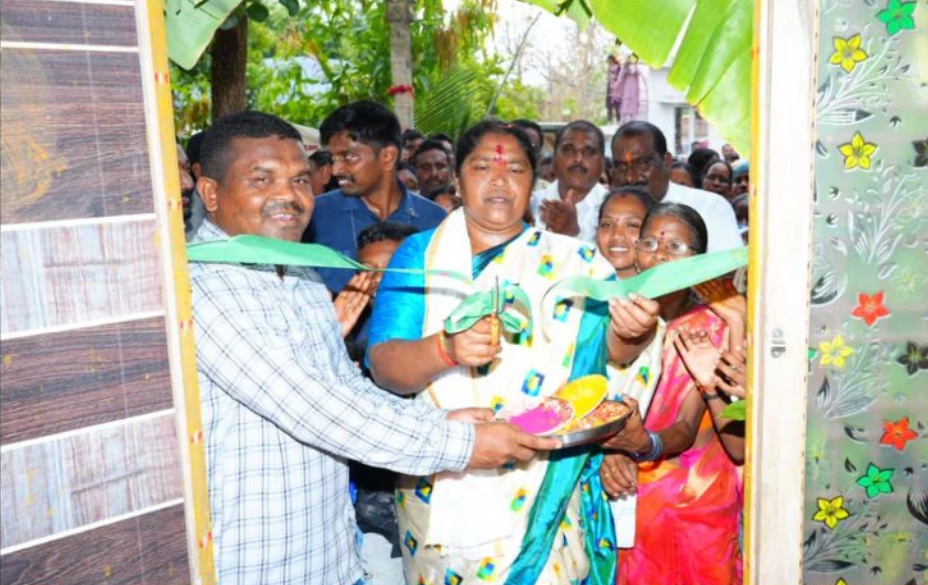
Numbers on a government order are one thing. A gruha pravesham (housewarming ceremony) is another. In September 2025, the Chief Minister travelled to Bendalapadu, a tribal village in Bhadradri-Kothagudem district, to inaugurate the house of newly-built Indiramma Indlu in person, walking through the settlement and meeting the families who now lived there.
Officials in the district had been told there would be zero tolerance for irregularities in the scheme, with anyone found guilty of malpractice suspended and referred to the Anti-Corruption Bureau (ACB). It may have been a small but certainly an important and powerful gesture. Revanth Reddy made sure that the scheme was built on trust, and the government (and officials) needed to be seen as trustworthy.
How ownership changes the equation
There’s a stability and a feel-good vibe that comes with owning your own house, which renting one cannot replicate. A house you own doesn’t come with a landlord who can ask you to leave anytime. It doesn’t take away your negotiating power when you fall short of the month’s rent. It becomes collateral, an inheritance, and a permanent address on your Aadhaar Card.
For families like Lachchamma’s and Rukmini’s, waiting is now measured not in disappointing months or years but in construction stages. For Ibrahim, whose faith in government housing had worn thin, hope and trust are yet to return. What Indiramma Indlu is really being measured against isn’t just its targets and numbers. The real test is whether it can win back the people who, like Ibrahim and Rajaiah, had already stopped believing a house was coming.