
In TG, a school uniform becomes public policy
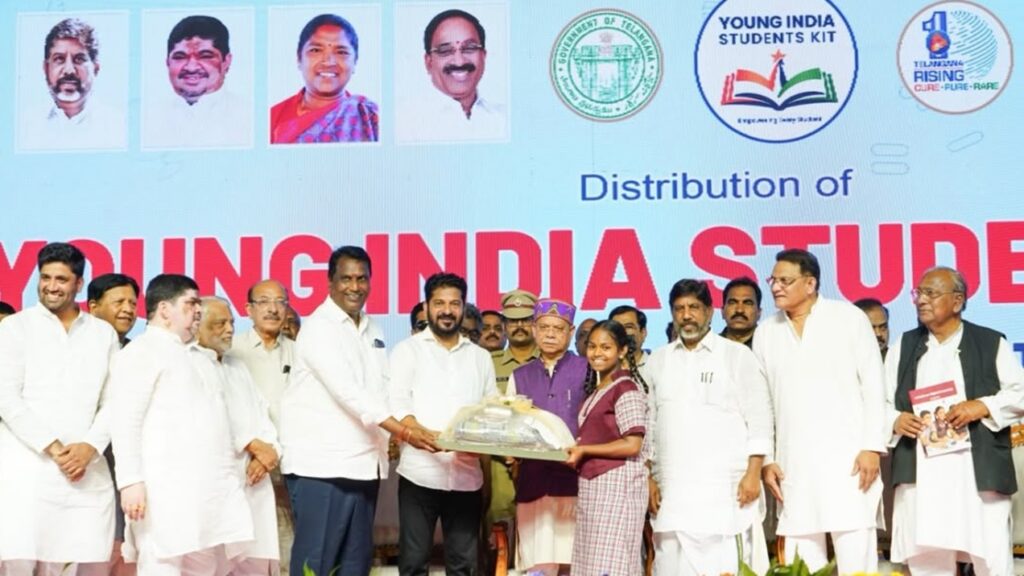
Forget the usual back-to-school checklist of textbooks and notebooks, Telangana just rewrote it entirely. So, the State government has recently done something that, we feel, more States should be copying. Ahead of the new school year in 2026, the Telangana Congress government went beyond just handing out textbooks to students like usual. It has also given every student admitted to government schools across the State a ‘Young India Student Kit’, which covered uniforms, shoes, neckties, bags, and even bedding for kids in residential schools.
From classrooms to closets
By spending Rs. 687.78 crore to do it, the State is making sure every child walking into a government school looks just as sharp as one walking into a private school. The State will be providing uniforms and essential supplies to students across government schools and residential institutions, including Kasturba Gandhi schools and BC, SC, ST, and Minority residential schools.
The reasoning behind this initiative actually matters. What Chief Minister A. Revanth Reddy has said is not as simple as it sounds, mainly because no government thinks like this! “Money spent on education is not an expense, it’s an investment in the State’s future,” said the Chief Minister. Sounds like a slogan? Well, it isn’t.
Look at what’s actually being funded and it becomes clear that someone sat down and thought about what a kid actually needs to walk into a classroom feeling like they belong.
Quality that matches private schools
Here’s the part worth paying attention to. The government made it clear to officials that the fabric used for these uniforms needs to match what private schools use. Not a cheaper knockoff version but the real deal. So they brought in ‘Mafatlal’, a well-known textile company, along with the Telangana State Handloom Weavers Cooperative Society, to supply close to 2.97 crore metres of fabric.
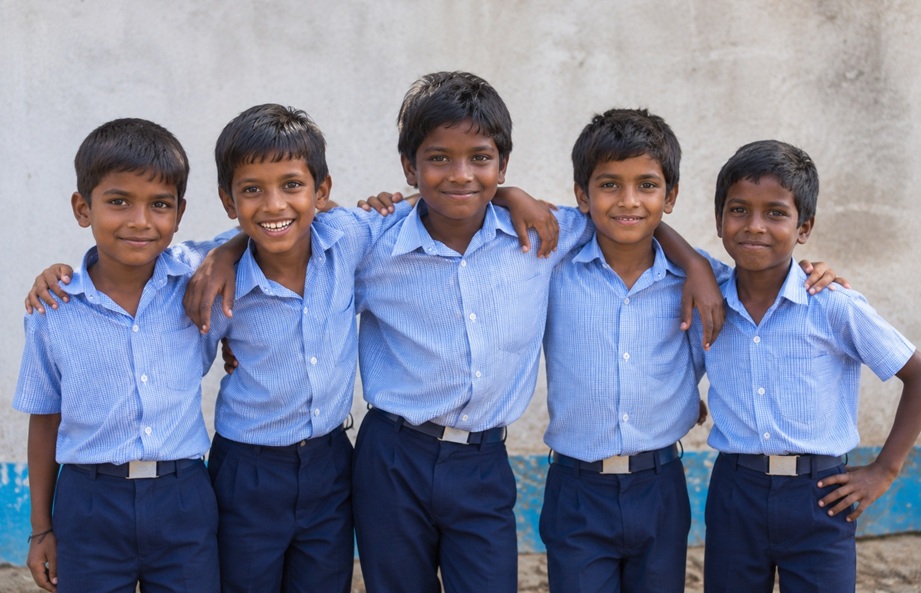
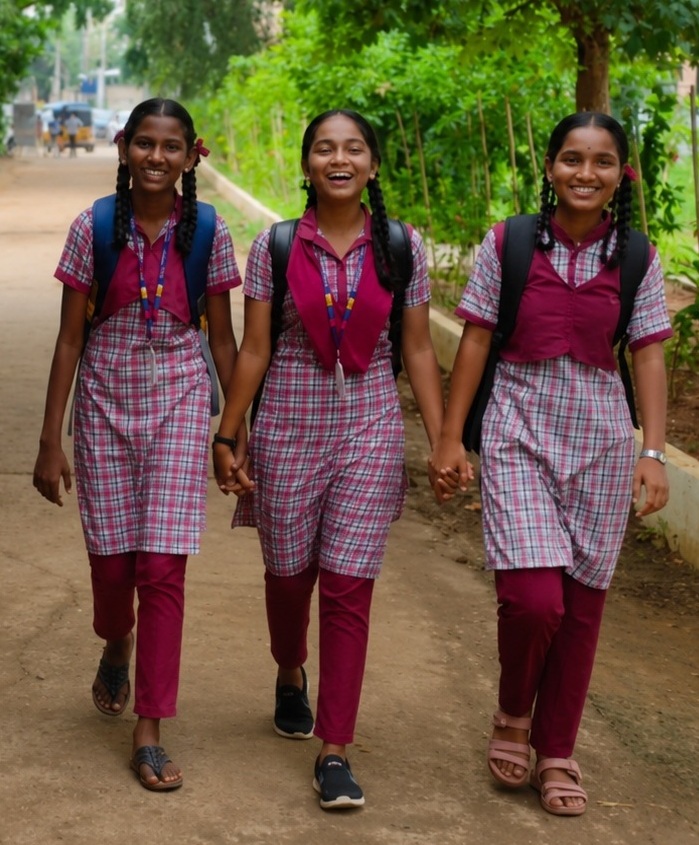
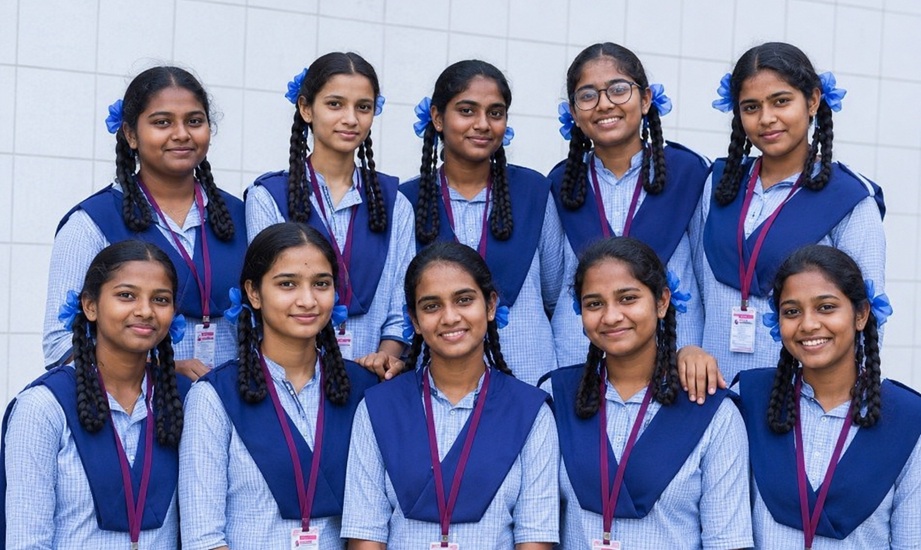
That’s enough for two full uniform sets for 27 lakh students. The uniforms come in light blue, dark blue, white, and maroon, with day scholars wearing light blue tops with dark blue bottoms, while residential school students get maroon-check tops paired with maroon bottoms. Girl students will additionally receive a skirt, a Punjabi dress, and a chunni.
Think about why this matters! Ask any parent and they’ll say kids notice when their uniform looks different from everyone else’s – whether it’s because of cheaper fabric, faded colours, or a fit that’s slightly off. Kids pick up on that stuff instantly. So, closing that quality gap between government and private schools means making sure a child in a government school doesn’t feel like they got the leftover version of everything.
A first in many ways
A few things here are happening for the very first time. Shoes used to only go to kids in BC residential schools. Now every government school student gets them too, along with belts. Junior college students, about 2 lakh of them, are getting bags, belts, ties, shoes, and socks for the first time ever at that level.
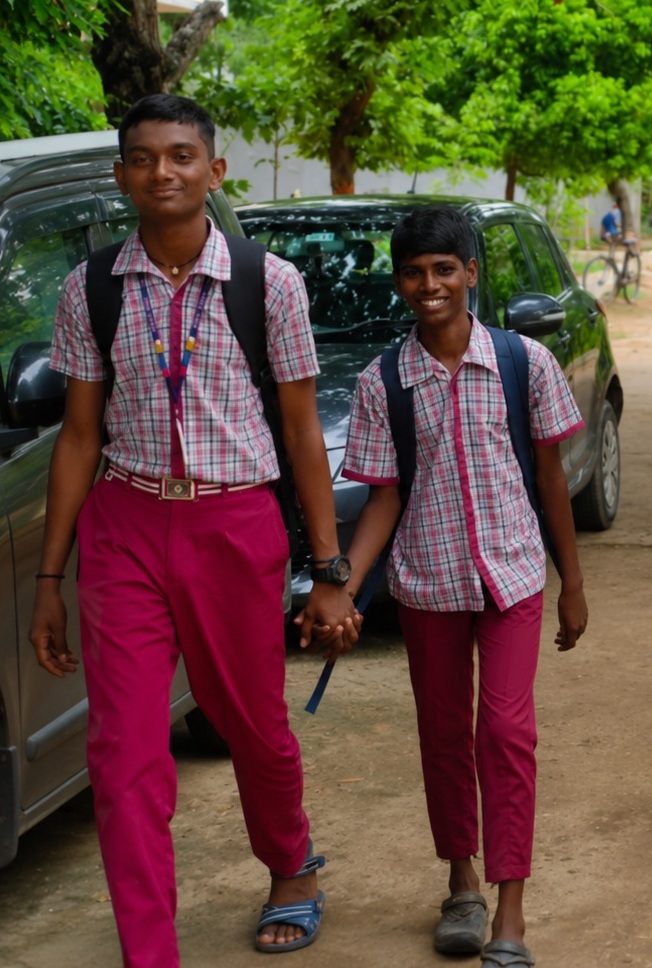
Children in residential schools are getting a proper full kit this year, including ID cards, tracksuits, night dresses, even bedding, plates, and trunk boxes. Minority residential school students are getting tracksuits and nightwear for the first time too. When all these things are taken into consideration, it stops sounding like paperwork and starts looking like someone finally spared some time to pay attention to the academic needs of a child, and focussed on filling the gaps.
Women’s groups get a bigger role
At another level, behind this massive distribution drive, is an equally significant employment opportunity. And what stands out most here is who’s doing the stitching. Women’s self-help groups across the State have been given the responsibility of stitching uniforms, with the capacity to stitch between 75,000 and 100,000 uniforms a day. The government is paying Rs. 75 for every uniform stitched, and with roughly 27 lakh students receiving two sets each, this work alone is expected to bring in over Rs. 40 crore in income for women’s groups in Telangana.
That’s huge. And that’s real income tied to real work.
The Telangana Leather Industries Promotion Corporation (TLIPC) is handling ties, belts, and ID cards, and handloom weavers are getting orders for blankets, bedsheets, and carpets. Between the stitching, the ties, and the woven goods, this programme is putting money into several corners of the local economy at once, all while clothing kids.
Fixing the system, not just supplies
The most underrated change though is probably the administrative one. In the past, individual departments and residential school societies bought their own supplies separately.
And when procurement is scattered like that, quality gets inconsistent, and sometimes suppliers cut corners because nobody’s watching closely enough.
This year, everything goes through one centralised system with transparent e-tendering. Every student, no matter which school or society they belong to, gets the same quality material at the same time.
Nobody writes news stories about tendering processes, but this is often the detail that decides whether a programme like this actually works or falls apart after year one.
When kids start school with confidence…
While the Congress government has mobilised full administrative machinery to complete the rollout for the academic session, localised distribution at remote school points continues sequentially through the school tracking system.
As classrooms across Telangana reopened this year, the message from the government was fairly direct. Uniforms, shoes and books might sound like small details that pale in comparison to bigger debates about education policy, but for lakhs of families, they make the difference between a child feeling included and a child feeling left out.
And Telangana surely got that right this time!
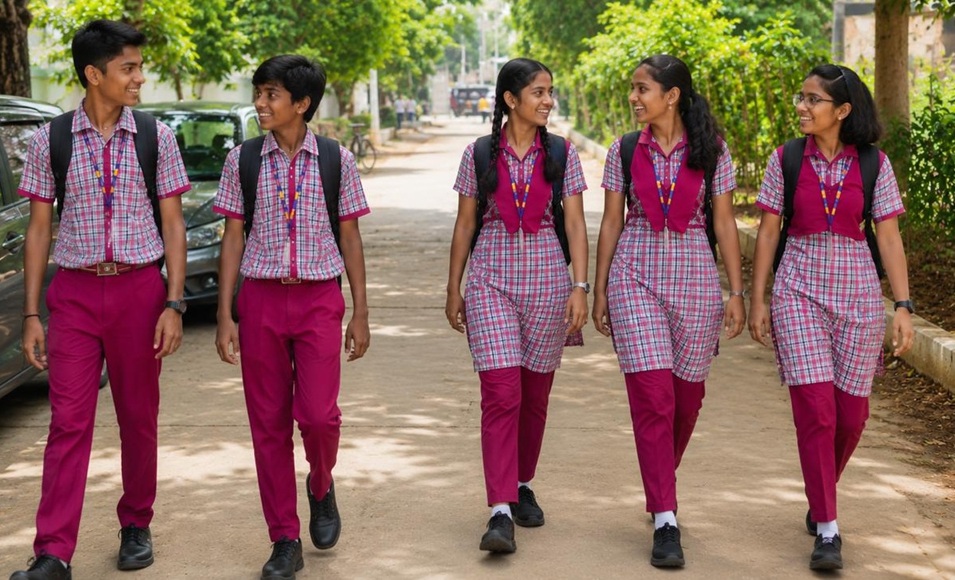
Some AI images have been used for representational purposes.