

What kind of issues can Bhu Bharati solve?
For years, thousands of Telangana landowners struggled with missing records, ownership disputes, mutation errors, and unresolved Sada Bainama claims, with many forced to approach courts for relief. The Bhu Bharati Act that came into force on April 14, 2025, seeks to change that by empowering revenue officials. Now, these officials can rectify land record errors, streamline ownership verification, and provide time-bound solutions through an accountable administrative mechanism.
Designed to address many of the shortcomings of Dharani, the new legislation, championed by Chief Minister A. Revanth Reddy, promises relief to over 25 lakh people while bringing greater transparency, accuracy, and legal certainty to land administration across the State.
Take the case of a person who owns some land but there is no record to show s/he is the owner and there’s no passbook – Section 4.6 under Bhu Bharati can easily take care of it.
In another example, a person’s details are available in Dharani, and the landowner has a passbook too, but there are errors in the records. There are 21 lakh applications, so far, on these issues – Section 4.5 of Bhu Bharati can help solve it.
The Revenue Divisional Officer (RDO) can now make inquiries into 9.24 lakh Sada Bainama land ownership issues and ensure that those eligible can get passbooks.
Course correction: Easy & simple answer to many issues
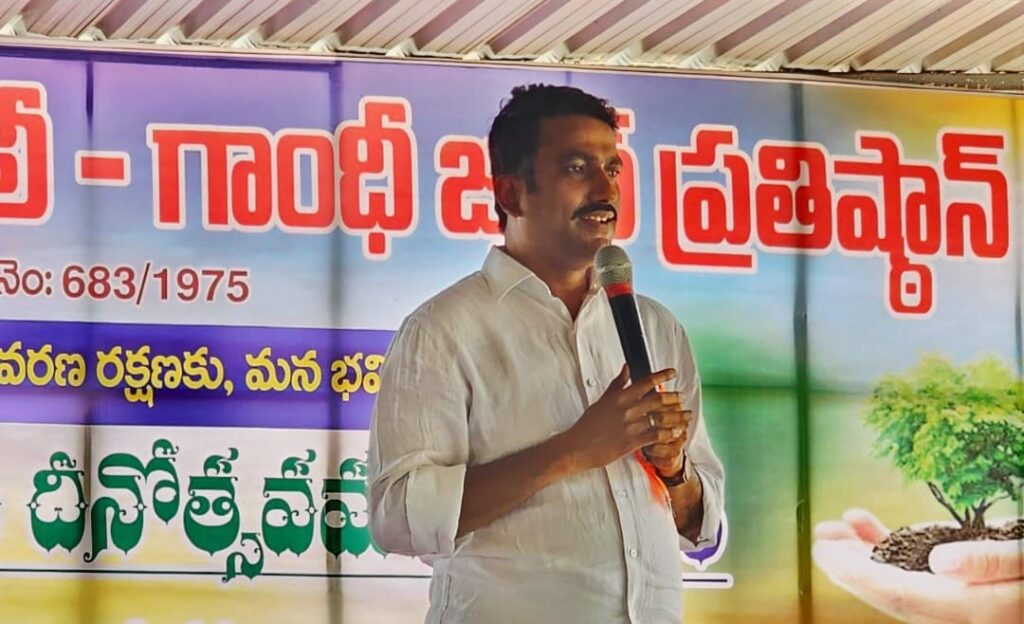
Chief architect of Bhu Bharati and land laws expert M. Sunil Kumar shared that around 25 lakh people can now get the land-related errors corrected through the Bhu Bharati portal, without needing to go to the court to solve disputes. Similarly, around 18.26 lakh acres of land rights can now be entered into Bhu Bharati.
He said that 80% of the issues arise out of land rights, which can be solved with Bhu Bharati legislation, while the remaining 20% are related to other issues like assigned lands – which could be because of Land Transfer Regulations (LTR) and Telangana Assigned Lands (Prohibition of Transfers) Act, 1977 (POT).
How is Bhu Bharati better than Dharani?
Earlier, if there was an error in the record of the mutated land – acquired through inheritance, kaul (tenancy), or court order – especially if someone else’s name is entered in place of the actual owner’s, there was no provision in Dharani to get it rectified, and people could only approach courts for resolution. But now, revenue authorities such as the Mandal Revenue Officer (MRO) and RDO can be approached with complaints.
Dharani has a proforma to be filled out when purchasing agricultural land, and registration is done based on the details in the proforma rather than on the “legally binding terms and conditions between the seller and the buyer”. And there’s no way to rectify any error or dispute arising out of the wrong entries in the proforma.
In mutation cases where the pattadar has deceased, Dharani required a joint claim by all the legal heirs for change of ownership, but the Tahsildar could take a unilateral decision and get the land mutated in a single heir’s name.

Mutation: What changes in Bhu Bharati?
However, under the Bhu Bharati Act, while a single legal heir can file an application, mutation will not be done immediately after the application is filed.
- A thorough inspection/investigation will be carried out by the Tahsildar and notices will be sent to all legal heirs.
- Only after considering every aspect – how many heirs are there, what is each one’s share, responses of all legal heirs, are daughters of the deceased seeking a share, etc., the Tahsildar will pass the orders for change of ownership.
- Another added advantage is that the Tahsildar will be given a specified period of time to facilitate the mutation.
- If it’s not done within the stipulated time frame, then the land will automatically be mutated in favour of the applicant.
- This will not only curb bureaucratic delays and make the process easier, faster and better, but also ensure that all legal heirs have a chance to register their response.
New decisions taken by the Telangana government
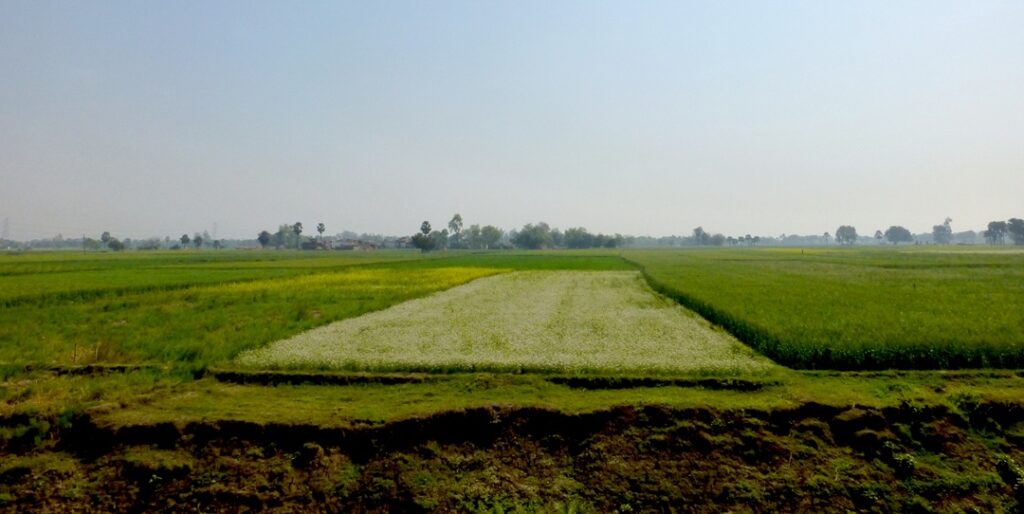
- Grama Kantam (Agraharam or Abadi) – that is, non-agricultural land or house plots in villages – will now get rights and passbook.
- Every farmer will be given a Bhudaar card.
- Every plot of land will get a unique Bhudaar (or Bhu Adhaar) number in place of a survey number – by entering that number, one can get to know the survey number’s borders/boundaries.
- Manual records will be maintained alongside digital records – in case something happens to digital records or they get manipulated.
- It has been mandated that every year, the online records will be printed out and taken to each village where land will be resurveyed, compared with the original documents, and signed by the revenue official concerned.
- District-level Land Tribunals to be created soon.
- The government aims to bring back land administration to the Revenue Department along the lines of the Patel/Patwari system in existence earlier – which kept record of lands and land dealings.
- Similarly, the responsibility of correcting the errors lies with the revenue officials rather than with the court. The idea is simple: Whoever made the error has to rectify it!
- Considering the welfare of the common people its responsibility, the Congress government, led by Revanth Reddy, offers free legal aid to the poor who cannot afford the cost of appeal. No other law among the 5,000-odd revenue/land laws in the country has done it so far.
Will Bhu Bharati succeed in resolving all land-related issues?
It depends on two things mainly, says Sunil Kumar –
- How well the farming community understands the benefits of Bhu Bharati and makes use of it.
- How well and systematically the revenue administration works in solving the issues.
However, he said, the government assures people of a few things:
- Training the revenue officials on a war-footing and sending them to villages.
- To tackle issues at the village and district level, the government aims to make use of
- Jamabandi
- Village Civil Courts
- Land Tribunals