

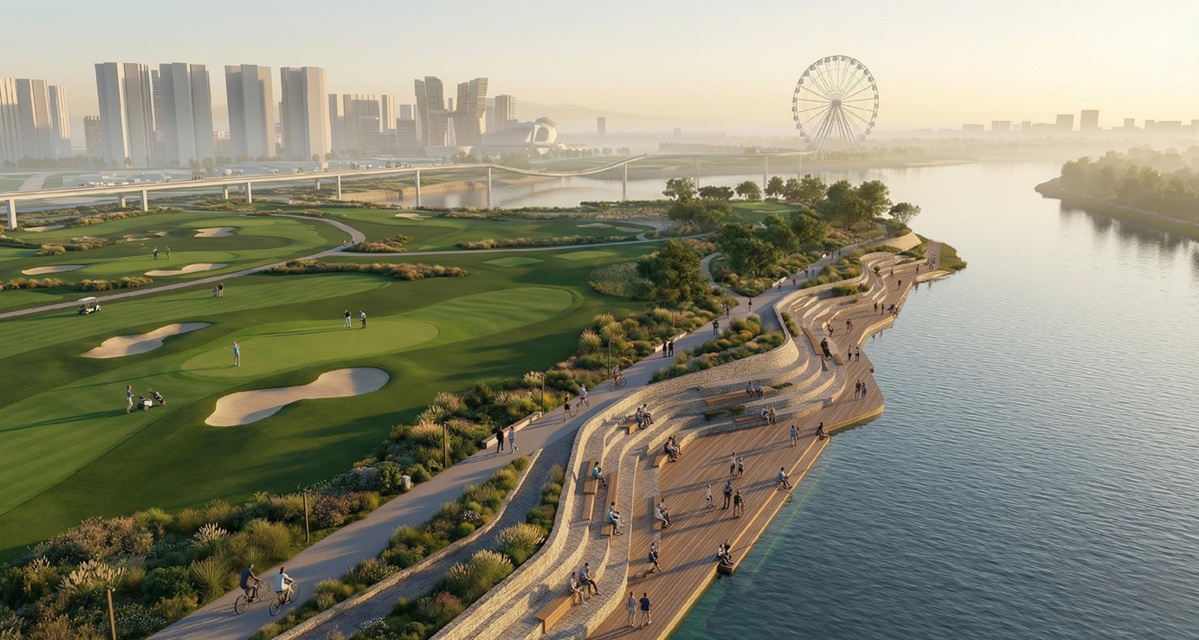
Beyond river cleanup: Vision behind Musi Rejuvenation
For most people driving through Hyderabad today, the Musi is easy to ignore. It flows – if you can even call it that – as a narrow, dark trickle hemmed in by concrete, garbage, and encroachments. Yet, this same river gave the city its existence, shaped its geography, and also supplied water that was, at one time, clean enough to drink.
Now, the Telangana Congress government, under Chief Minister Revanth Reddy, wants to bring it back. The question is: at what cost, and for whom?
What the project actually involves
The Musi River Rejuvenation Project is not a small undertaking. It covers approximately 55 kilometres of the river that runs through Hyderabad, making it one of the most ambitious riverfront development initiatives in India. For comparison, the Sabarmati Riverfront in Ahmedabad – often held up as the gold standard – runs just 11 kilometres.
The proposed project is divided into phases. The first phase covers a 21-kilometre stretch from Bapu Ghat to Gandhi Sarovar and carries an estimated price tag of around Rs. 6,000 crore. The total project cost has been pegged at around Rs. 58,000 crore. The Asian Development Bank has committed a loan of Rs. 4,100 crore, and the 2025-26 State budget set aside Rs. 1,500 crore for it. So, that’s the scale of the project we are talking about here.
In terms of what is planned, the project spans five key areas: water management, urban planning, mobility, environmental restoration, ecological sustenance and the rehabilitation of people currently living along the riverbanks. Beyond “cleaning up the river”, the idea is to build a functioning urban corridor around it incorporating walkways, transport links, parks, and economic zones.
Why the Musi, and Hyderabad, need this
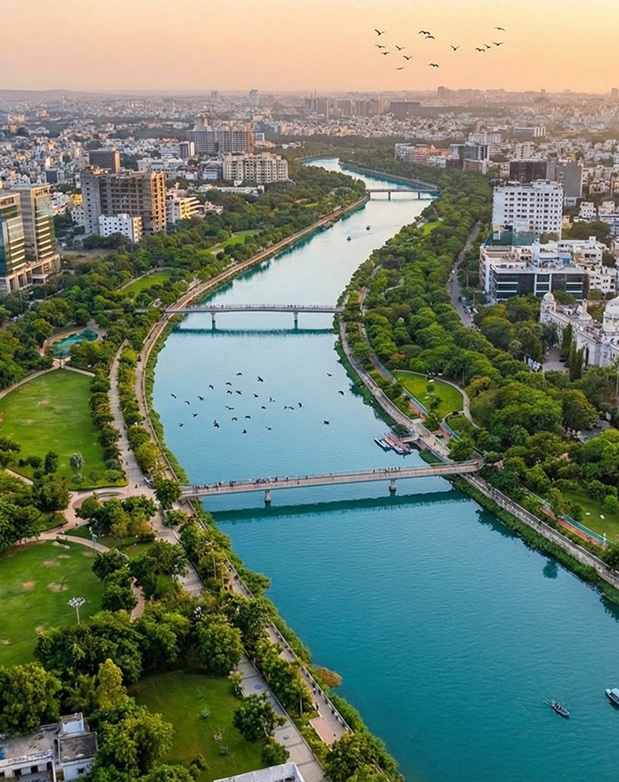
This restoration initiative is clearly not a slapdash beautification project. It’s a well-thought-out and carefully planned revival of a lost river because Musi did not become what it is overnight. Decades of neglect (a term that has gained significance over the past few months), unchecked sewage discharge, industrial effluents from areas like Patancheru, and encroachments on the floodplain have turned a natural resource that once teemed with life and living things into what is considered today as “one of the most polluted rivers in the country”.
The water quality has deteriorated to the point where downstream farmers have raised concerns about using it for irrigation. Environmentalists have pointed to the presence of heavy metals, pesticides, and pharmaceutical contaminants in the river’s sediment.
There was nothing inevitable about this. There was a time when the Musi was a perennial river with a productive floodplain. The idea of redeveloping it is not new either; it was first raised after the devastating 1908 floods that killed thousands, and floated again in the 1990s. What is different now is the scale of the ambition and the political capital being staked on it.
Professor V. Srinivas Chary of the Administrative Staff College of India (ASCI) has noted that any river rejuvenation project of this kind typically takes 15 to 20 years to complete. “If political will is there, then doability is not an issue,” he said, adding that visible results on the ground are possible within five years if the work is done in stretches.
The ‘Urban Living’ argument
The pitch for the project rests heavily on what it could do to the city’s daily life. A cleaned-up Musi with green buffers, walking paths, and public spaces would give Hyderabad exactly what it lacks now – a “usable” urban waterfront.
Cities like London and Seoul are the reference points the planners keep returning to. The Cheonggyecheon stream in Seoul was a concrete-covered highway in 2003. Today, it is a four-kilometre public greenway that draws millions of visitors every year and has measurably reduced temperatures in its surrounding neighbourhoods. The Thames, too, was once so polluted that the Parliament had to suspend sessions due to the smell. Now, it supports fish species that had disappeared for generations.
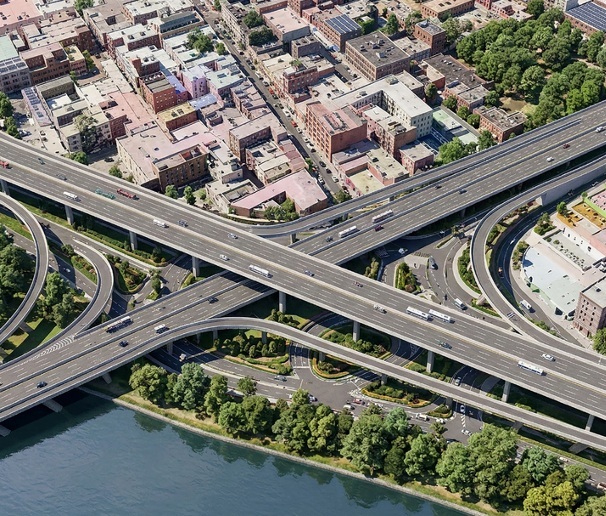
The Musi could, in theory, do something similar for Hyderabad. It cuts through the heart of the city, separating the old city from the new. A “functional” riverfront could stitch these two halves together with mobility corridors and public spaces. Plans include connecting the eastern and western parts of the city along the river, with transport hubs planned along the corridor. If it works, commutes get easier, air quality potentially improves, and the river finally becomes a spine and stops being a barrier.
Balancing development & rehabilitation
Here is where the project gets complicated. An estimated 10,000 people currently live on the Musi’s riverbed and buffer zones. Many have been there for decades. Their homes need to come down for the project to proceed.
The government has offered 2BHK flats in housing complexes as rehabilitation, but the execution has been rocky with protests and opposition marking the Congress government’s settlement efforts.
The People’s Committee for Musi River Rejuvenation, a coalition of civil groups and experts, held a satyagraha at Dharna Chowk in April 2026. Their demand was not that the project should be scrapped, but that it should be done properly. They asked for hydrological studies, a full census of affected residents, ward-level public hearings, and a commitment that displaced families – not real estate developers – would be the first beneficiaries of the regenerated riverfront.
The broader question
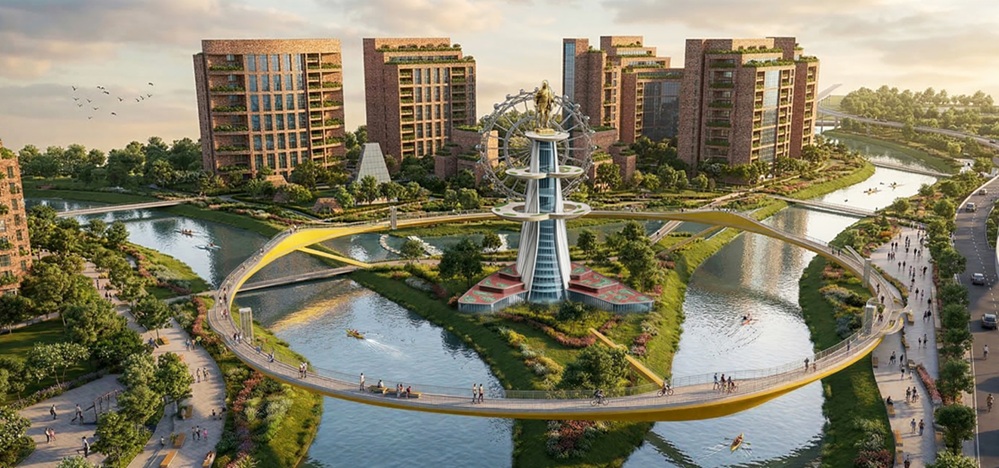
These kinds of apprehensions are palpable and understandable. It is this tension that runs through the entire debate around the Musi project. Done well, it could genuinely transform how people in Hyderabad move, breathe, and live. It could reduce flood risk for low-lying colonies, bring down temperatures through green cover, and give a city of over 1 crore people something to rejoice about.
The 2030 completion deadline the government has set for the project is ambitious. The first tranche of serious funding,
Rs. 375 crore, was released in May 2026, even as the detailed project reports for major components are still being finalised.
Hyderabad has built a reputation as a city that gets things done when it commits to them. The Musi deserves that same commitment, including the harder work of making sure the people it displaces are not left behind and expected to bear the cost of the city’s transformation.