
The city that’s learning to invest in itself
There is a unique kind of optimism, not necessarily involving loud announcements or chest-thumping, that belongs to cities in motion! Particularly in cities like Hyderabad where a little quieter but active effort shows up in construction hoardings, freshly laid pavements, and project plans that take a few years to become something you can walk through. Hyderabad, for anyone paying attention, is carrying a lot of that optimism right now.
Some of it is visible. Some of it is still underway. But it’s the vision of Chief Minister A. Revanth Reddy that is making all the difference necessary for the growth of a city like Hyderabad.
Talk to anyone who has watched this city over the last two decades, and you’ll hear a familiar story. Starting with the software boom, moving to the airport, through the pharmaceutical corridors, and the biryani-and-business reputation that preceded LinkedIn by a decade! But what has begun to take shape now feels different. It is not about a single industry or one employer anymore.
Tale of a single city
It is the tale of a single city and the way it is building infrastructure for experience, urging people – silently – to come, stay, spend, and leave with a desire to return.
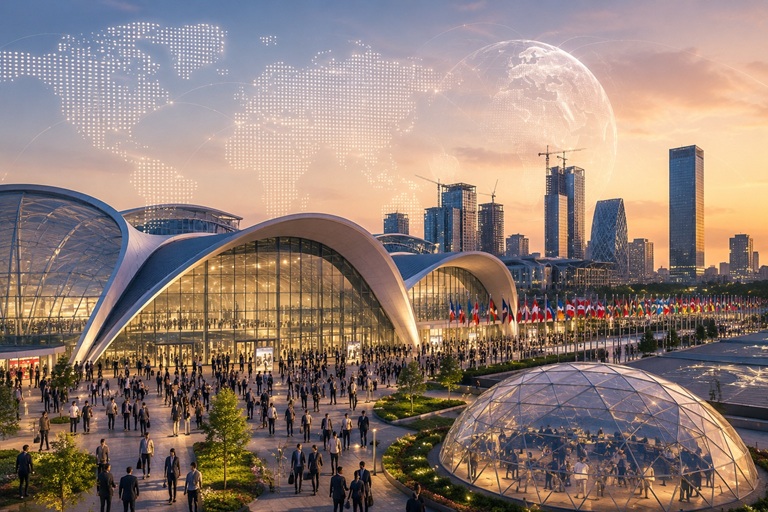
Take the expo hub, for instance. Hyderabad has hosted large gatherings before – whether it is trade shows, political summits, or industry conclaves. But a “purpose-built convention and exhibition ecosystem” changes things at the fundamental level. It changes the way the city spends its weekends.
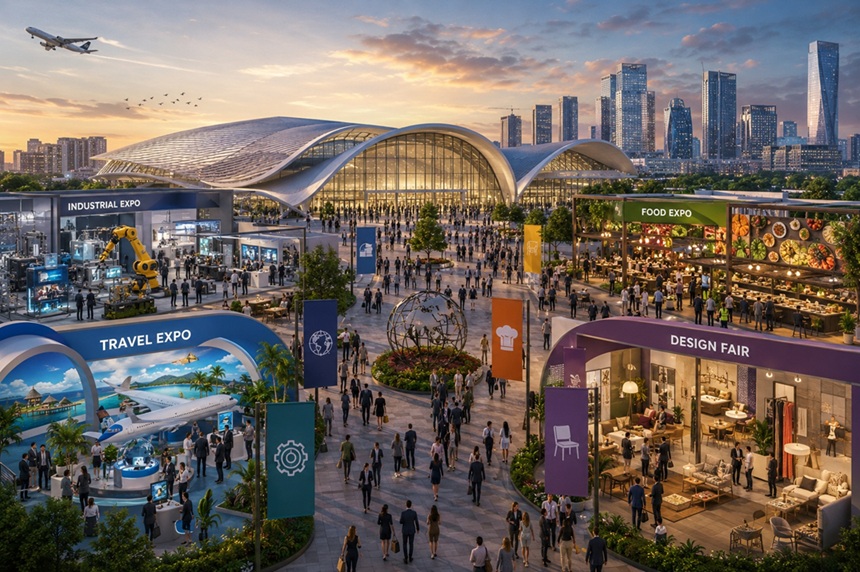
Imagine what happens if, suddenly, there are design fairs and travel expos.
Startup showcases that spill into food conclaves. Book festivals which draw crowds that linger over chai and conversation(s). Hotels fill up on Thursday nights. Airport routes and vehicles stay busy. Homestays – even those that have grandmothers making filter coffee at seven in the morning – get booked three weeks in advance.
Impact of MICE tourism
The economic ripple from this kind of infrastructure is well-documented globally. Cities like Singapore, Dubai, and Barcelona generate billions annually from MICE – meetings, incentives, conferences, exhibitions – tourism. India, despite having some of the world’s most capable cities, has barely scratched the surface.
A well-placed “expo hub“ in Hyderabad, backed by its existing – and upcoming – connectivity and hospitality capacity, could genuinely shift that equation. And the people who benefit most aren’t those who sit in corner offices. On the contrary, it’s people like your local artisan who find a buyer from Düsseldorf not because someone “helped” them access a market, but because art enthusiasts and even simple window-shoppers simply walk past the stall and like what they see.
But there’s one thing about big infrastructure. It only works if other small things work too.
Improving tourist satisfaction
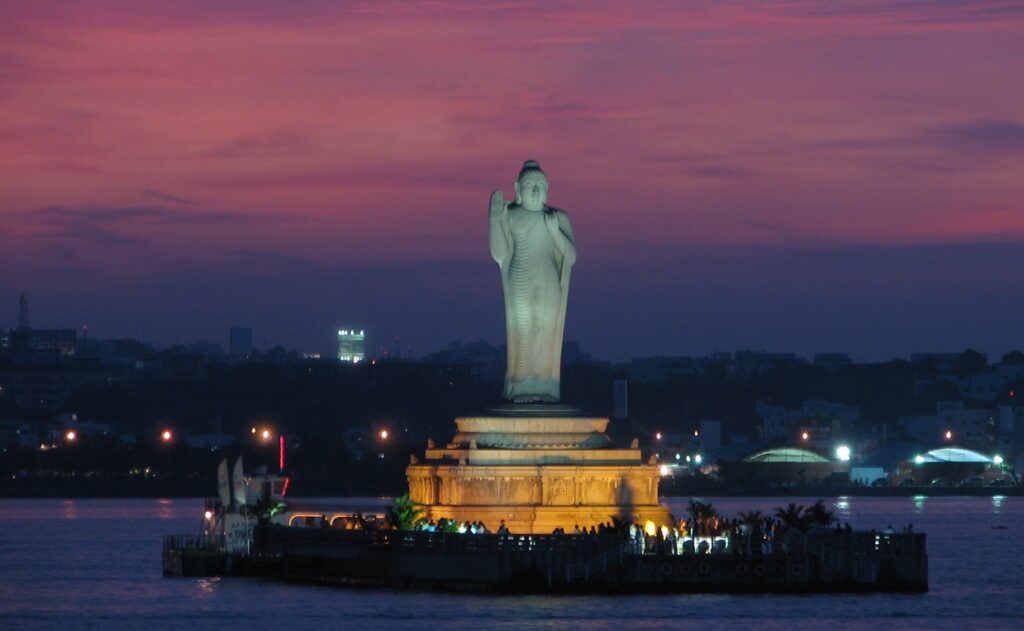
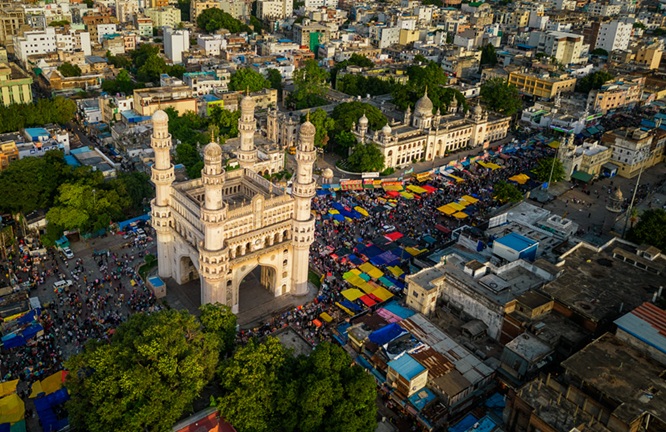
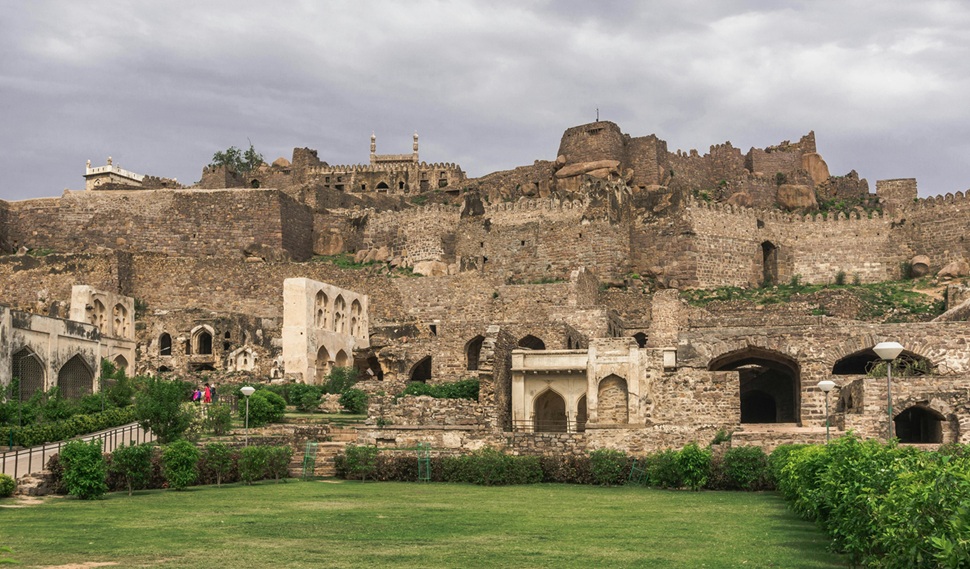
Tourism, at its core, is an accumulation of small experiences. It is akin to a signpost that makes sense in three languages. It is the last-mile bus that shows up on the dot, every hour of every day. It is the public toilet that doesn’t make commuters feel nauseous as they walk past it.
These surely aren’t glamorous investments. Nobody cuts a ribbon for a clean footpath. But they are the differentiators between how visitors “endure” a city and how they “recommend” it. They are also, most importantly, the factors that differentiate between residents who are embarrassed by their city and those who make it their own wearing their pride on their sleeve.
Research consistently shows that tourist satisfaction correlates less with marquee attractions than with what urban planners call “basic infrastructure quality”. A 2023 World Tourism Organization (WTO) report noted that comfort, safety, and ease of navigation rank among the top factors influencing a traveller’s likelihood to return to a country or a city. In other words, fix the walkways, and the footfall follows.
Conservation tourism gains momentum
And then, there is Vantara.
Conservation tourism is one of the fastest-growing segments globally, and it is also one of the least understood. We tend to think of tourism as noise – selfies, queues, and plastic bottles. Vantara, as a project built around animal rescue and environmental stewardship, imagines tourism as a form of education, even conscience.
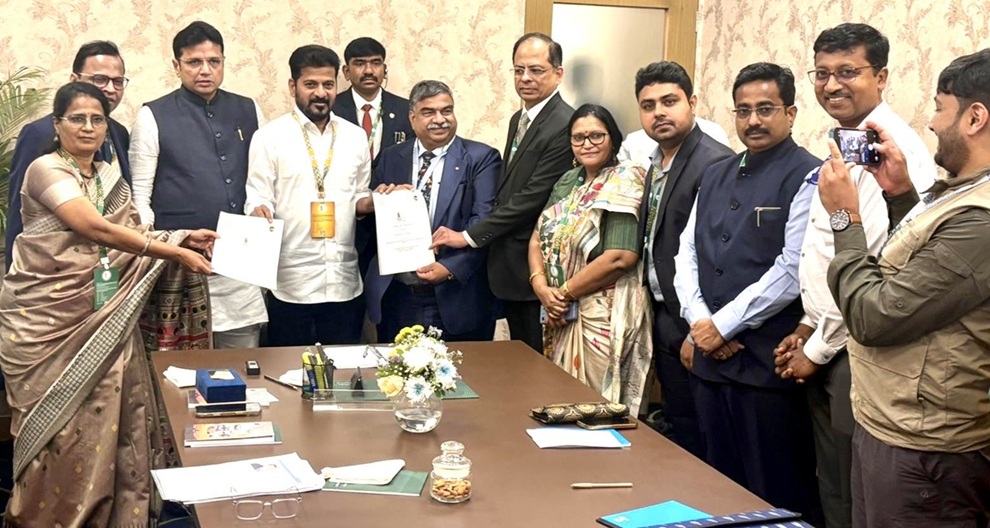
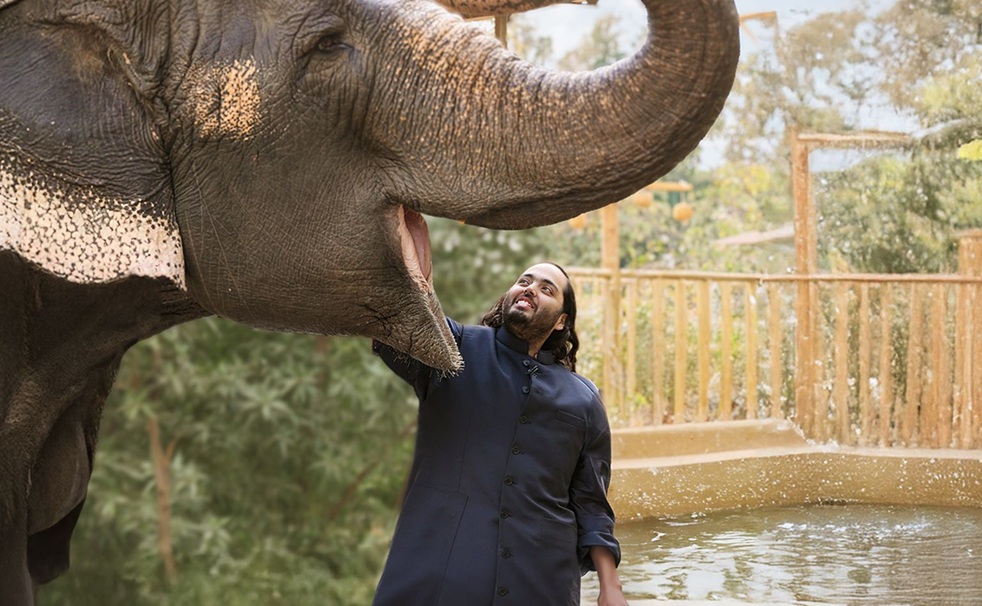
If done right – and there is an emphasis on those three words – a project like this can do much more than just draw visitors. It can build a new category of employment. Veterinarians, conservation educators, eco-guides who know the name of every bird in a five-kilometre radius, researchers running longitudinal studies, and craft and artisan communities making things from sustainable materials. These are not hypothetical jobs but are roles that can become a reality, and grow in cities that decide to take their natural heritage seriously.
More than the economy, though, Vantara has the potential to remind people that “animals are not props” and “forests are not decoration”. That is not a small thing to accomplish.
Announcements vs reality
None of this is inevitable. Cities make grand announcements all the time. Infrastructure gets delayed, diluted, or simply forgotten in the gap between a press release and a budget allocation. But the direction, at least, feels pointed somewhere worth going.
Hyderabad has always been good at ambition. What it is slowly getting better at is the discipline of following through – one expo centre, one clean footpath, one rescued tiger or elephant at a time.
srinivas ambati
we appreciate all the efforts put in for Telangana Rising,especially for Hyderabad. being a Hyderabdi, I always wish to be a part of growing ,glowing Hyderabd. few suggestions-tank bund may be made trash free with some initiatives,which attracts tremendous tourists. more trash bins to be arranged,strict adherence to be practiced. sponsors can provide these colourful bins. awartds may be given to hygienic street food stalls.