
When the screen goes dark, the river lights up
At a time when tech jobs are increasingly giving way to AI with people losing employment in a moment’s time and careers making employees feel like their lives are spinning out of control, Hyderabad is betting on a 55-kilometre riverfront to open a different kind of future. A future that can be built with reliance on people and not on platforms alone.
Not long ago, getting into Hyderabad’s IT sector felt like you’ve “made it in life” and landed a safe and secure job with amazing growth prospects. You learned a skill, you found a company, and you stayed and grew. The path was clear, the income was steady and the future felt predictable in the best possible way. With a six-to-seven-figure salary, for a double-income family, buying that “luxurious 3 BHK in the heart of the Financial District” for a couple of crores didn’t feel out of reach but felt real.
That feeling is harder to hold onto now.
What comes next?
Technology is moving at such a breakneck pace that the rules are being rewritten more frequently than a toddler’s tantrums. Entry-level roles in coding, design, and customer support – the first rung for thousands of young professionals – are beginning to shrink. For many people sitting at those desks today, staring at an uncertain future, a single question pops up in their mind: “What comes next?”
It’s a fair question. And Hyderabad, which has always found a way to adapt, may have the beginnings of an answer. No, the answer, this time, doesn’t lie in a new software stack or a government skilling scheme, but relies on “a river’s ability to provide for its people” – once again!
Older than the city itself, the Musi has run through the heart of Hyderabad for centuries. But for decades, stretches of the river have been neglected and choked by encroachments. The river ended up being reduced to an “urban feature” and a fixture in the background that people drive past without as much as glancing at it.
A new economic engine
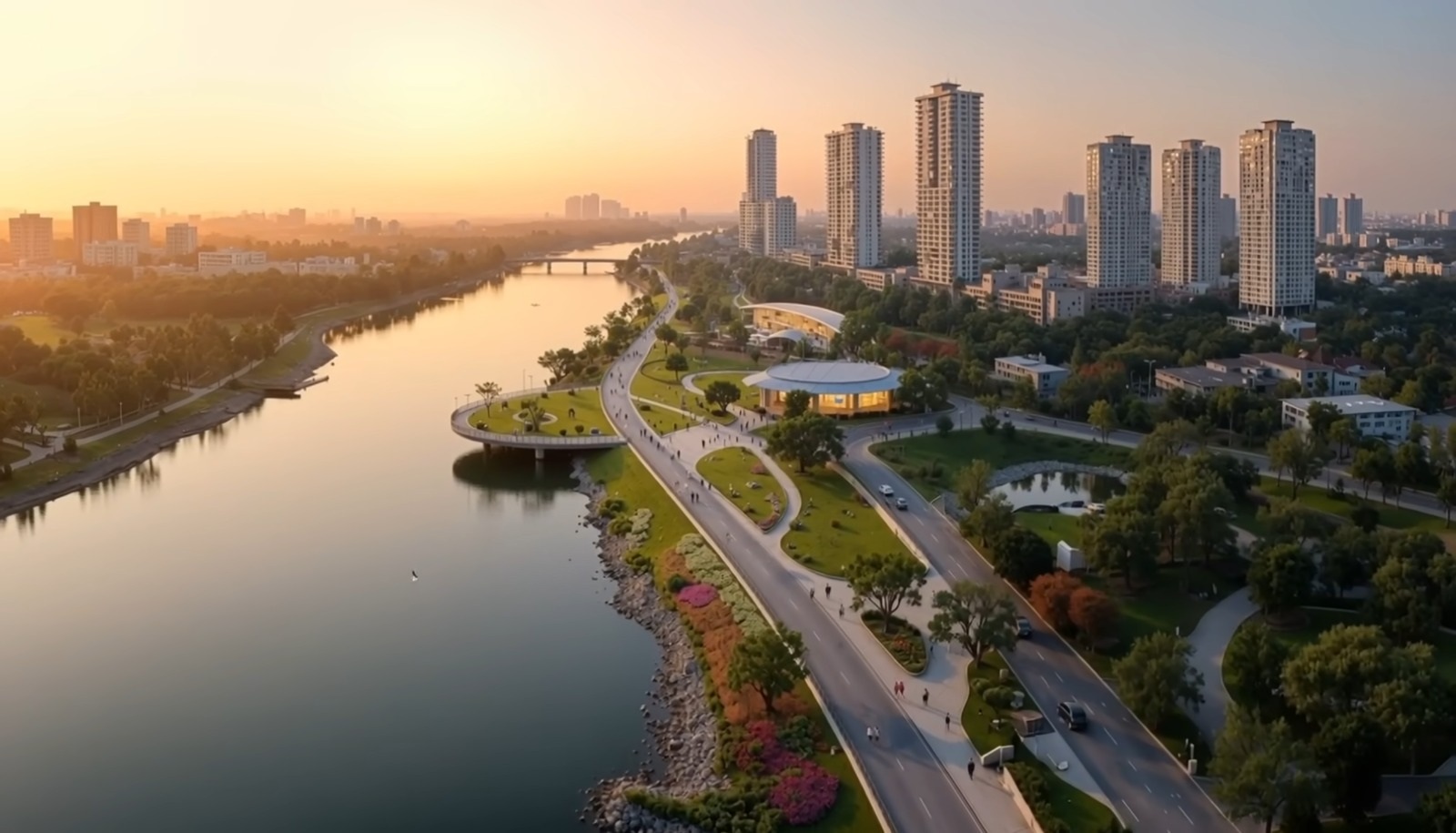
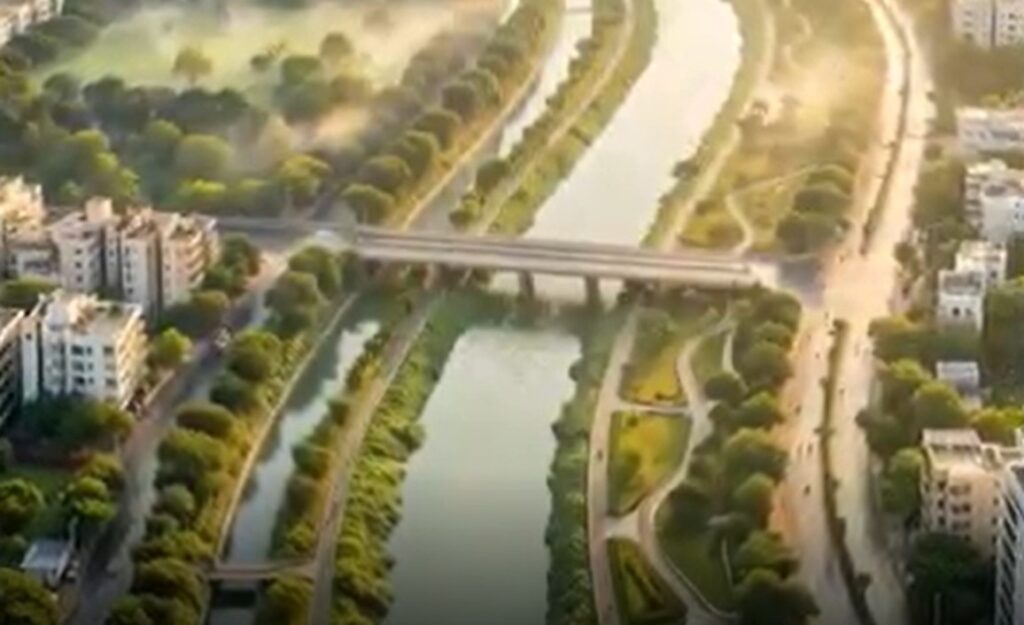
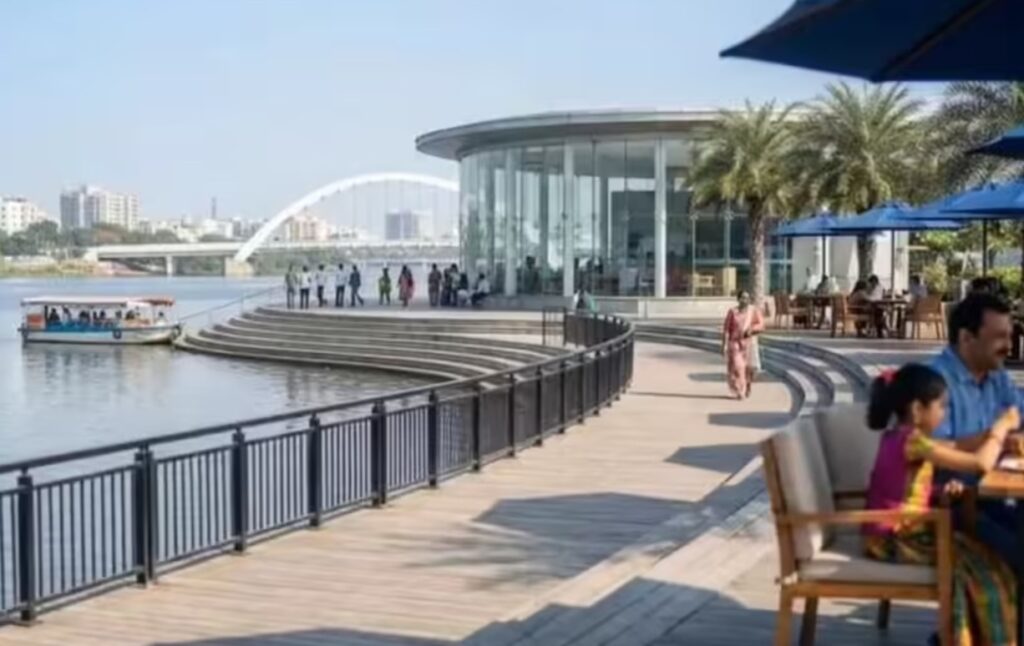
The Musi Riverfront Development project intends to change that. The plan covers a 55-kilometre stretch along the river and is designed as a full-scale “economic engine”. The vision includes green public spaces, cultural hubs, hospitality zones, event venues, retail promenades, and waterfront experiences – on the whole, an ecosystem that continues to stay alive through the day and deep into the night.
55 km – riverfront stretch to be developed
Lakhs – of jobs projected in tourism & hospitality
24/7 – economy that doesn’t shut at 11 pm sharp
This is the part that matters most to the people asking that question about “what comes next”.
When human intensive industries take over…
Tourism, hospitality, events, retail, and experiential services are among the most human-intensive industries on earth which cannot be automated away. They require human presence, human touch, warmth, skill, and interaction – qualities that no algorithm has managed to replace convincingly, yet!
Projections suggest that the riverfront, when fully realised, could generate livelihoods for lakhs of people across the city.
A Hyderabad-based economist says, “The Musi project is not just about restoration but it’s also about giving Hyderabad’s workforce a new stage to perform on. Nobody seems to
understand at this point, even as they cry hoarse about the “project displacing people”, that this revival of the river is necessary to make the city water resilient for the next century. Added to that, tourism and hospitality industries will employ people at every level – from the first-time job seeker to the seasoned entrepreneur.”
Betting big on city’s future
Going by the way the Congress government has been making efforts to make people aware of the importance of Musi Rejuvenation, it is very clear that Chief Minister Revanth Reddy has made this project a priority. The political will to push it forward is significant, because projects of this scale that cut across land, heritage, ecology, and multiple civic agencies tend to get stuck at any stage. So, the Chief Minister’s decision to move from planning to action shows that this is something different, and much more, than routine governance. It indicates that he’s betting big on the city’s future.
And Hyderabad has a decent record of making those bets pay off.
The city was, not so long ago, a mid-sized cultural capital with a great biryani reputation and not much else to show the world. Then came the IT corridor, HITEC City, and a generation of engineers who helped turn it into one of Asia’s most watched, and sought out, tech hubs. That transformation was driven by investor-friendly policies, infrastructure, and a willingness to imagine things differently and scale up.
Opportunities galore
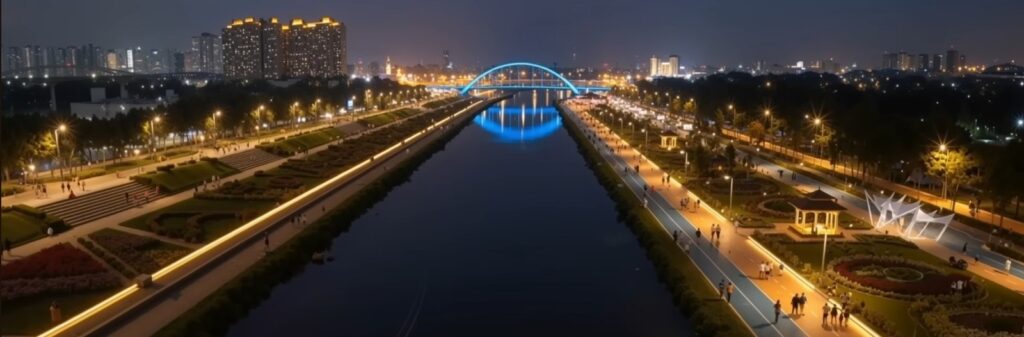
The Musi project asks for the same imagination, albeit it being applied to a different challenge. The IT boom created opportunities for a specific kind of worker. The riverfront, by contrast, is designed to work for almost everyone – whether it’s a fresh hospitality graduate, the street food vendor, the tour guide, the craftsperson, the gig worker looking for something stable, or a retired employee who wants a part-time role that enables him to share his experience.
“What excites me about the Musi riverfront project is that it creates opportunity at scale, and not just for one type of person or one job profile. A well-run tourism economy pulls in people from every walk of life and keeps them employed. Not everyone can get a job in a five- or four-star hotel or an upscale boutique café but every aspirant is likely to land a job once this project is completed. A 55-km stretch is not small. It’s sure to teem with opportunities of every kind,” says a hospitality industry professional in Hyderabad.
Volume, variety & sustainability
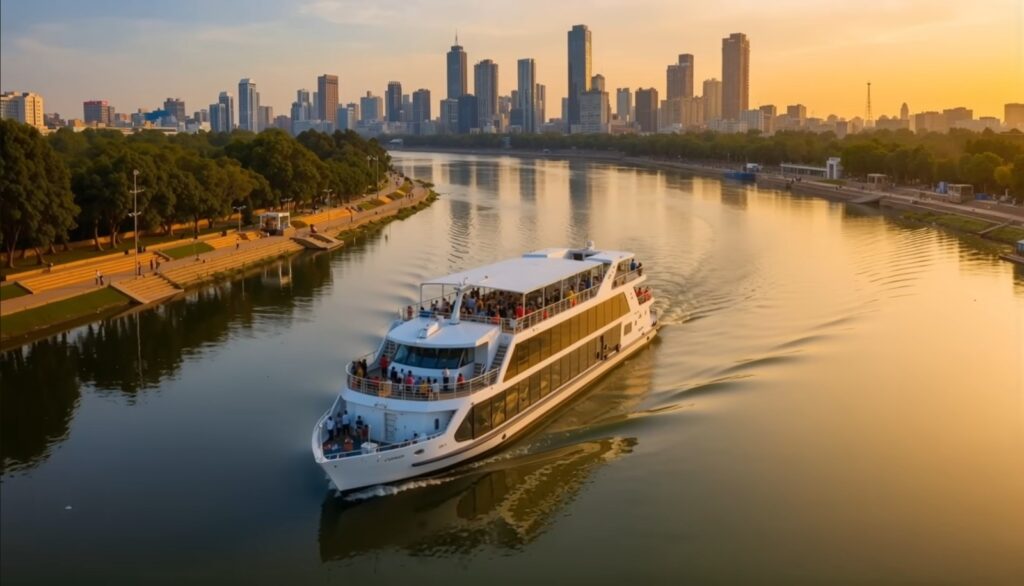
The jobs that will come from a thriving riverfront won’t all look the same. Some such as hotel management, event coordination, and retail operations will be formal. Others will be informal but consistent. Think of food stalls, guided tours, artisan markets, photography services. The point is not uniformity. The point is volume, variety, and sustainability.
None of this is to say that the IT sector is finished. It isn’t. Hyderabad will continue to be a technology city. The engineers will still be there, the campuses will still hum with the excitement of freshmen, and new roles will emerge in place of old ones. That cycle is not unique to this city, which completely understands the nature of technology.
But a city that places all its bets on one sector is also one that makes itself vulnerable. What the Musi riverfront offers is “a second pillar” that Hyderabad has not had before. A large, people-centred economy running alongside the tech corridor, creating a different kind of security for a different kind of worker.
Musi has always been there. It has seen the city grow, stumble, and grow again. Now, perhaps, it gets to be part of what comes next.