

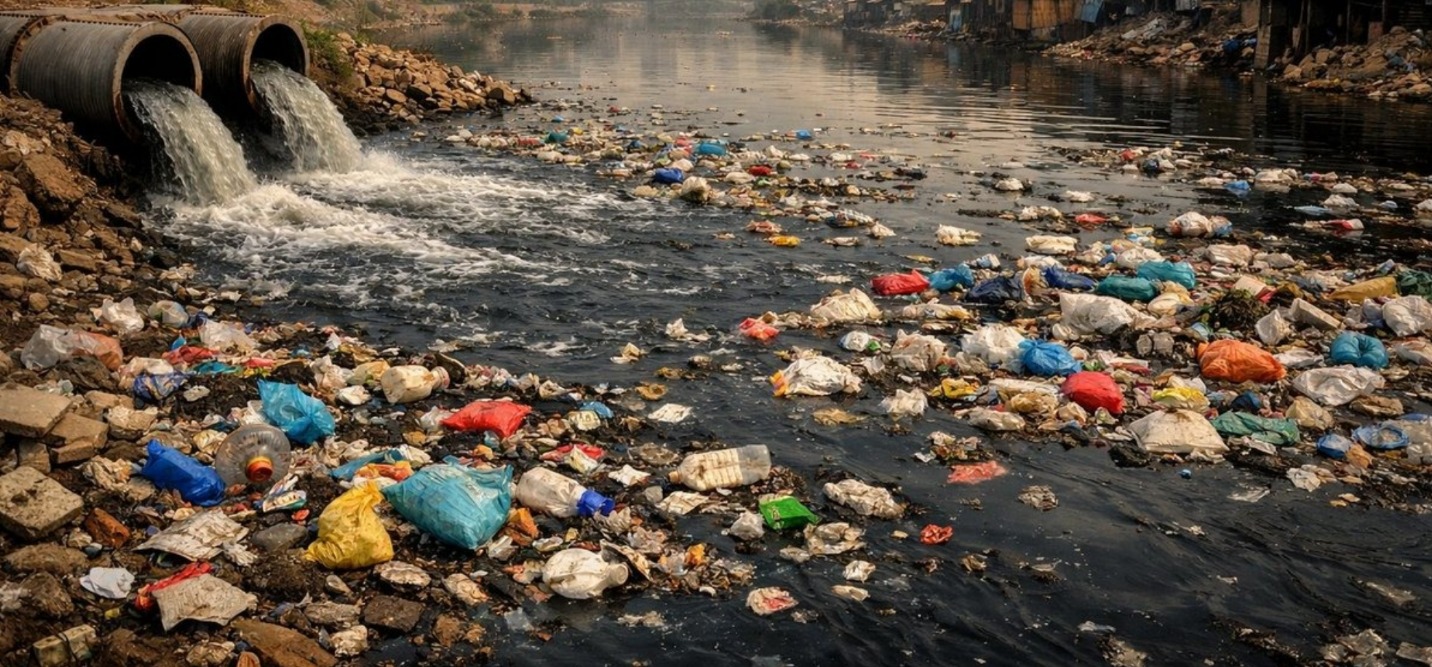
How decades of urban growth & neglect changed Musi
There is a photograph taken somewhere in the early 1900s of the Musi River in full flow, its banks lined with temples, ghats and washermen going about their morning work. The river looks alive and useful. Today, if you stand at the same stretch, you see something else entirely. A sluggish, dark channel carrying the city’s waste toward the outskirts is the sight that greets you.
This is what a century of urban ambition does to a river when the infrastructure cannot keep up with the appetite.
For most of Hyderabad’s history, the Musi was the reason the city took shape where it did. Communities gathered on its banks for rituals and festivals. Fishermen depended on its waters for livelihood. Farmers used it to irrigate fields downstream. Moving beyond geographies and maps, the river became a part of one’s daily life in a way that is difficult to explain to anyone who only knows the Musi in its current state.
A river in memory, a drain in reality
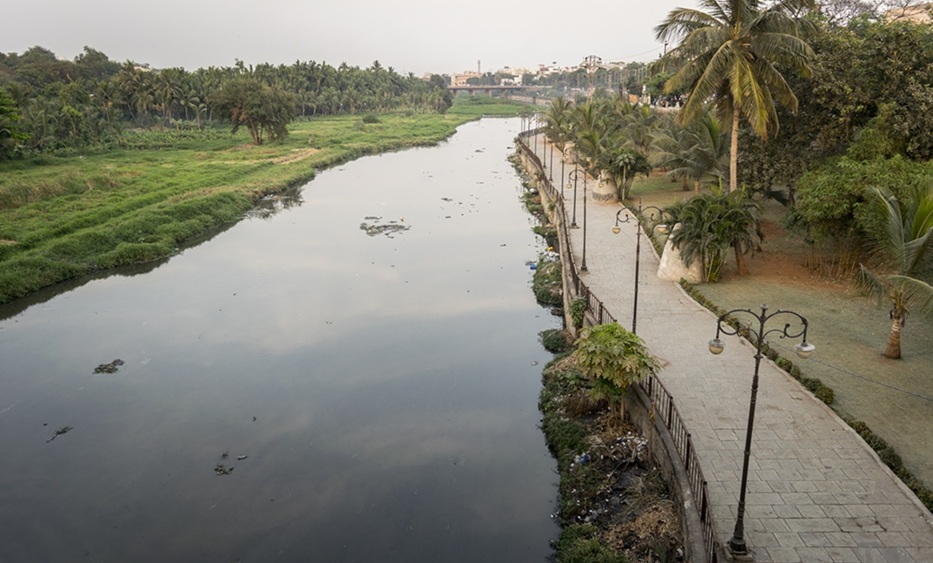
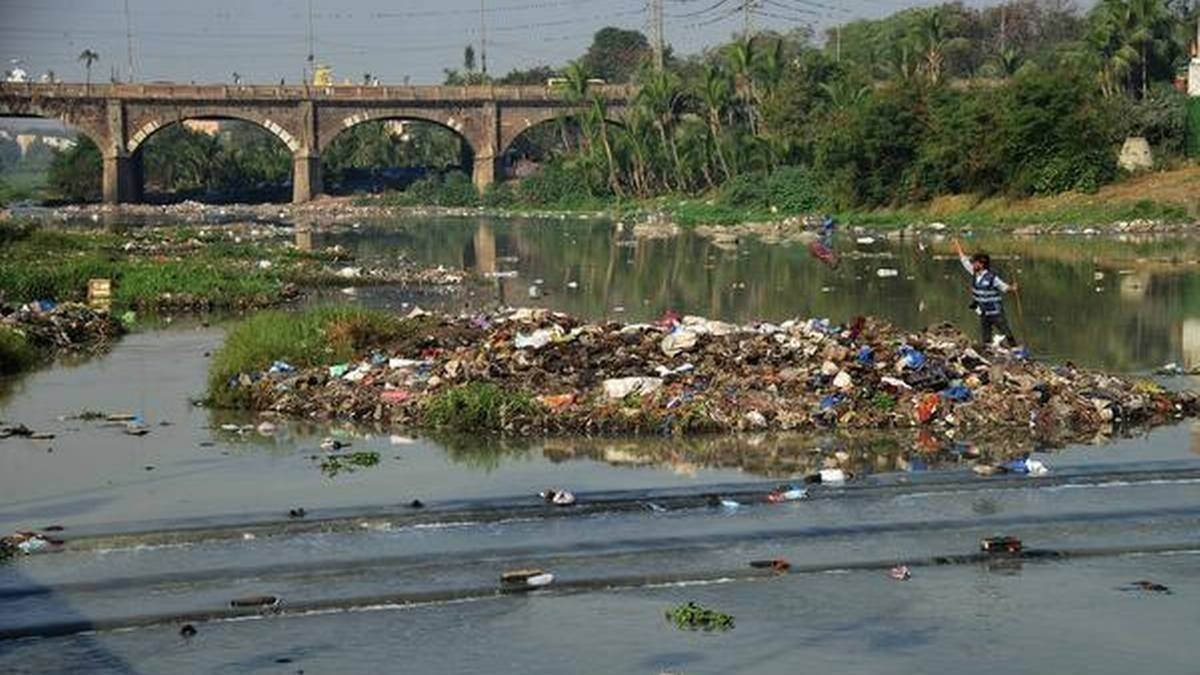
The decline did not happen overnight. It was gradual but it crept on the city, after Independence, as Hyderabad began to grow – slowly at first but rapidly later, turning a blind eye to the Musi’s anguish and failing to keep the river alive.
New residential colonies pushed outward, industries came up and the population swelled beyond anyone’s imagination with immigrants from other States and cities making Hyderabad home, thanks to the amazing opportunities it provides.
Sure, none of this was unusual for a developing Indian city in the second half of the 20th century. What was unusual, or rather what became a pattern repeated across Indian cities, was that the infrastructure that was needed to handle all this growth simply did not arrive in time. Wastewater treatment, drainage planning, riverbank regulation – these things lagged badly behind the construction cranes and the expanding city limits.
The Musi became the place where that gap showed up most visibly.
From life-sustaining water source to receiver of waste
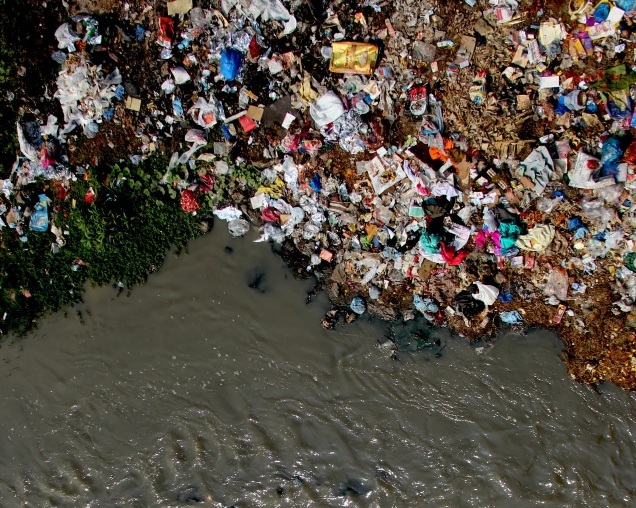
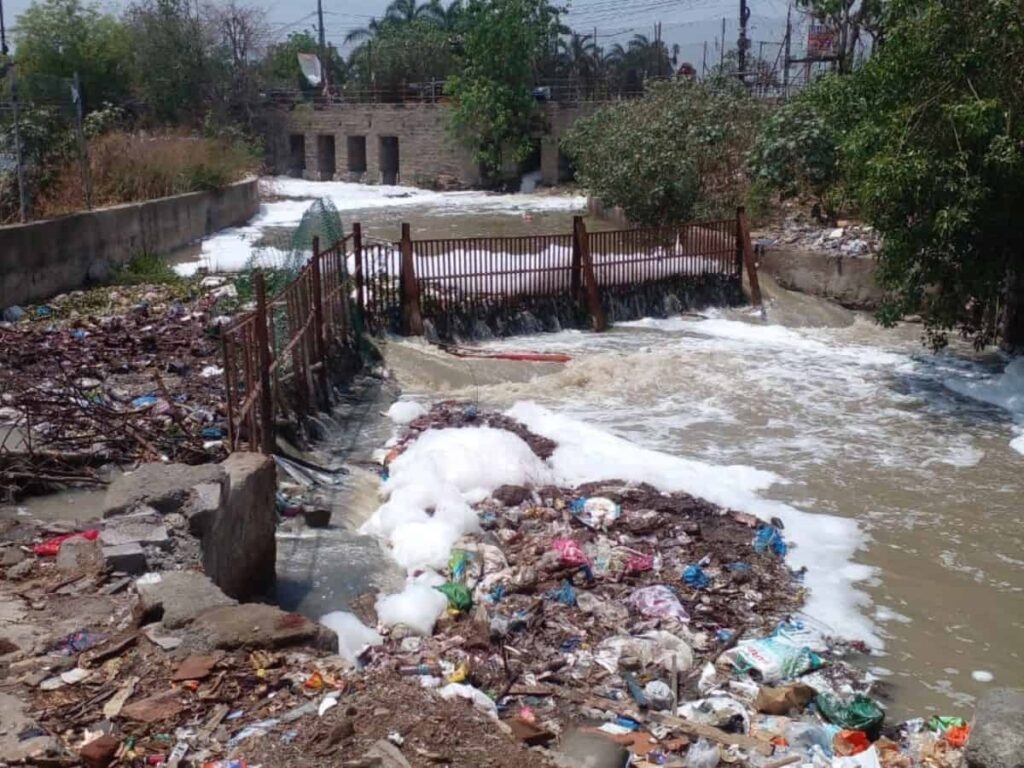
Today, the 55-kilometre stretch of the river passing through Hyderabad receives a staggering volume of the city’s wastewater. Hyderabad generates close to 1,950 million litres of sewage every single day. The existing treatment facilities cannot handle that load. What cannot be treated gets discharged – untreated or only partially treated – straight into the already-dying river.
Then there is the industrial pollution. Manufacturing units and pharmaceutical companies operating in and around the city release effluents that carry chemicals, heavy metals and drug compounds into the water. Researchers have detected antidepressants, antifungals and anti-inflammatory substances in river samples. The Central Pollution Control Board (CPCB) has placed the Musi on its list of “the most polluted rivers in the country”. That is not a list any city wants its river on.
The story of encroachments on riverbed
Alongside the sewage and the effluents, there is the physical encroachment. Surveys suggest that more than 10,000 illegal structures now exist along the Musi corridor, with many of them sitting directly on the riverbed or within the floodplain.
These structures not only look bad but also block the natural flow of water and compromise the river’s ability to carry floodwaters safely. In addition, they turn what should be a drainage buffer into an obstacle course. Solid waste dumping along the banks – plastic, construction debris, non-biodegradable material of every description – has made the situation worse.
Real problem, real consequences
It is easy, when reading statistics like these, to think of the Musi primarily as an environmental problem. But the degradation has real human consequences.
Thousands of people live along the riverbanks, many of them in low-income settlements that developed over decades, often without access to piped water or proper sanitation. These residents are not only distant observers of the river’s decline but are also living inside it. Exposure to polluted water and contaminated surroundings is not an idea for them. It is a daily reality that shows up in health outcomes and in the “erosion of a way of life”.
Unfortunately, what was once a source of water and livelihood has become, for many of these communities, a breeding ground for mosquitoes and a real public health hazard.
A crucial part of collective cultural memory
And yet, for all the damage, the Musi has not entirely lost its hold on the city’s memory and imagination. Ask older residents about the river and something shifts in the conversation. A memory surfaces, a festival is mentioned, or a name for a ghat comes up although it no longer functions as one. The collective cultural memory of what the Musi was runs deeper in older Hyderabadi families that have lived to see its vibrancy and also its decline.
That, perhaps, is where any serious reckoning with the Musi has to begin; not just with the pollution data or the encroachment numbers, but with the recognition that this was once something worth protecting. And that the city let it go anyway.