

Breathing life into neighbourhoods…
There’s a strange kind of poetry in reclamation — the act of giving back what was quietly taken, of drawing lines once blurred by greed or neglect. In Hyderabad, that poetry has found its own rhythm through the Hyderabad Disaster Response and Asset Protection Agency (HYDRAA) an institution that has, in barely a year, begun rewriting the geography of a city that had almost forgotten where its public spaces ended and private ambitions began.
As of mid-October 2025, HYDRAA has reclaimed over 1,000 acres of encroached land across the metropolitan region. These are not just pieces of earth — they are parks that once belonged to children, lakes that once breathed life into neighbourhoods, and government lands that once held the promise of public good. What began as a cautious administrative experiment has, within months, turned into one of the most decisive urban land recovery efforts in Telangana’s history.
In September 2025, the agency announced that 923 acres valued at a staggering Rs. 50,000 crore had already been restored. A month later, that number had crossed the four-digit mark. In the arithmetic of governance, those are monumental figures; but in the ledger of civic memory, they mean something even greater — that a city long encroached upon is finally learning to breathe again.
The breakdown of what HYDRAA has reclaimed reads like a map of renewal, with every inch quietly correcting the city’s long story of expansion and erasure.
- Government land: 424 acres returned to the public domain.
- Roads: 218 acres freed for movement and safety.
- Lakes: 233 acres, including 33 acres of lakebeds, revived to their natural contours.
- Parks: 25.65 acres restored to community use.
- Nalas and drains: 15 acres cleared, helping prevent the urban flooding that had become Hyderabad’s seasonal grief.
👉🏻And in smaller, scattered corners — 75 acres of footpaths and unauthorised structures removed.
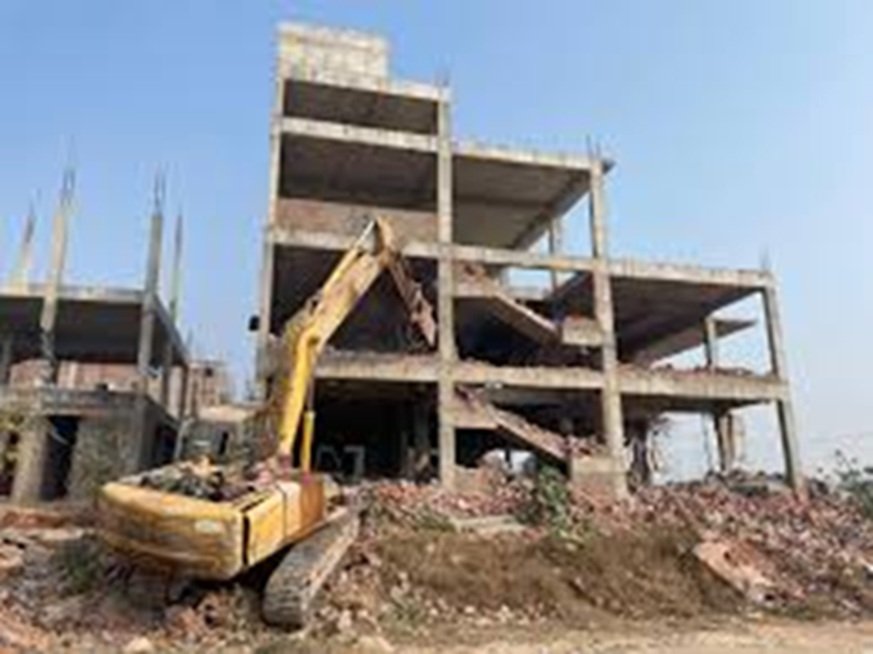
The recent tale, told in simple terms
Some of the most striking recoveries have unfolded in recent months.
In Gajularamaram, Quthbullapur mandal, 317 acres of government land worth Rs. 15,000 crore were recovered in September — a sweeping operation that set the tone for what was to follow. Early October saw HYDRAA’s teams move into Kondapur’s Bikshapathi Nagar, reclaiming 36 acres valued at Rs. 3,600 crore, where makeshift eateries and vehicle sheds had slowly blurred the edges of land that once belonged to the State.
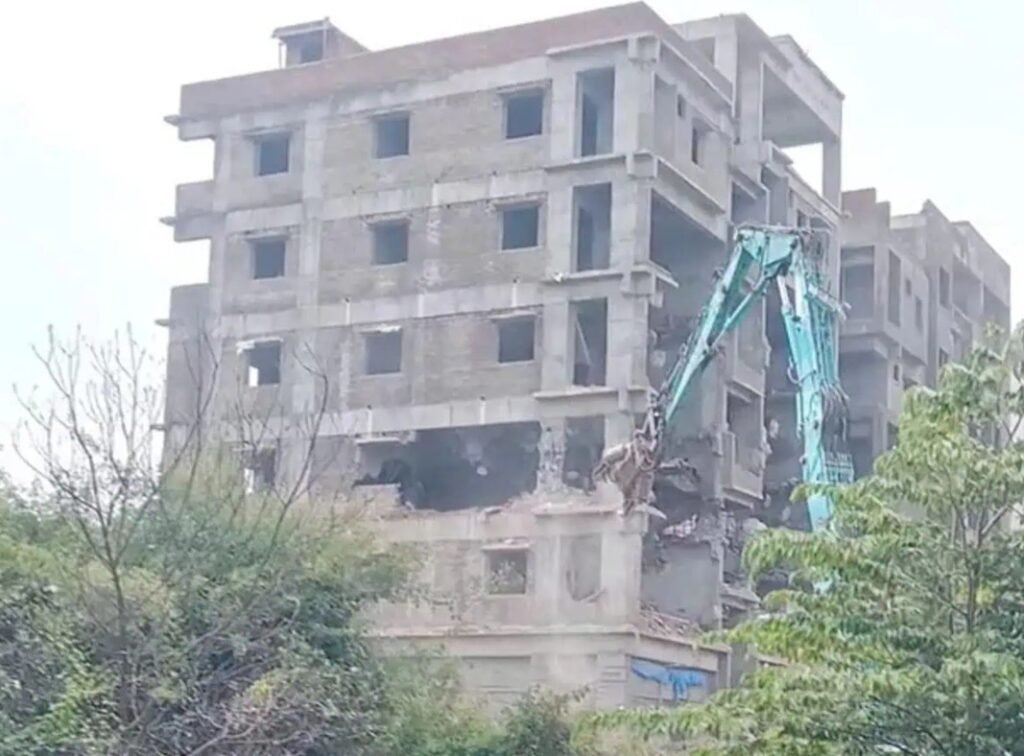
In Banjara Hills, where every square foot of soil comes heavy with value and influence, five acres on Road No.10 — worth Rs. 750 crore — were taken back after demolishing structures raised on forged papers.
Further south, Rajendranagar’s Janachaitanya Layout witnessed another act of justice. Here, HYDRAA removed encroachments across 19,878 square yards — about 4.1 acres — of parkland. The sheds, walls, and rooms that had risen on green space were torn down, restoring the land, valued at Rs. 139 crore, to the public. In Kavuri Hills, unauthorised tin-roofed structures built by a sports academy in a park met the same fate; in Gajularamaram, over 100 acres were cleared of temporary sheds.
The return of the commons
These numbers may sound clinical, but on the ground, they represent something human. A footpath rediscovered, a lake’s edge made visible again, a waterbody (like the Bathukamma Kunta) restored a park unshackled from boundary walls — these are the small, tender victories that define what Hyderabad is slowly becoming.
Officials credit the agency’s success to a blend of data-driven vigilance and political will. HYDRAA’s mapping systems cross-verify ownership records, while on-ground teams act swiftly to prevent re-encroachments. But what gives the effort its moral weight is transparency with demolitions documented, recoveries logged, and the reclaimed spaces marked for public or infrastructural use.
There’s still resistance, of course. Encroachment is not only an act of greed but often of survival, of people trying to carve a place in an ever-expanding-but-jostling-for-space city. Yet, the larger narrative is unambiguous: Public land is public trust, and for the first time in years, that trust is being visibly defended.
Active intervention, winning appreciation
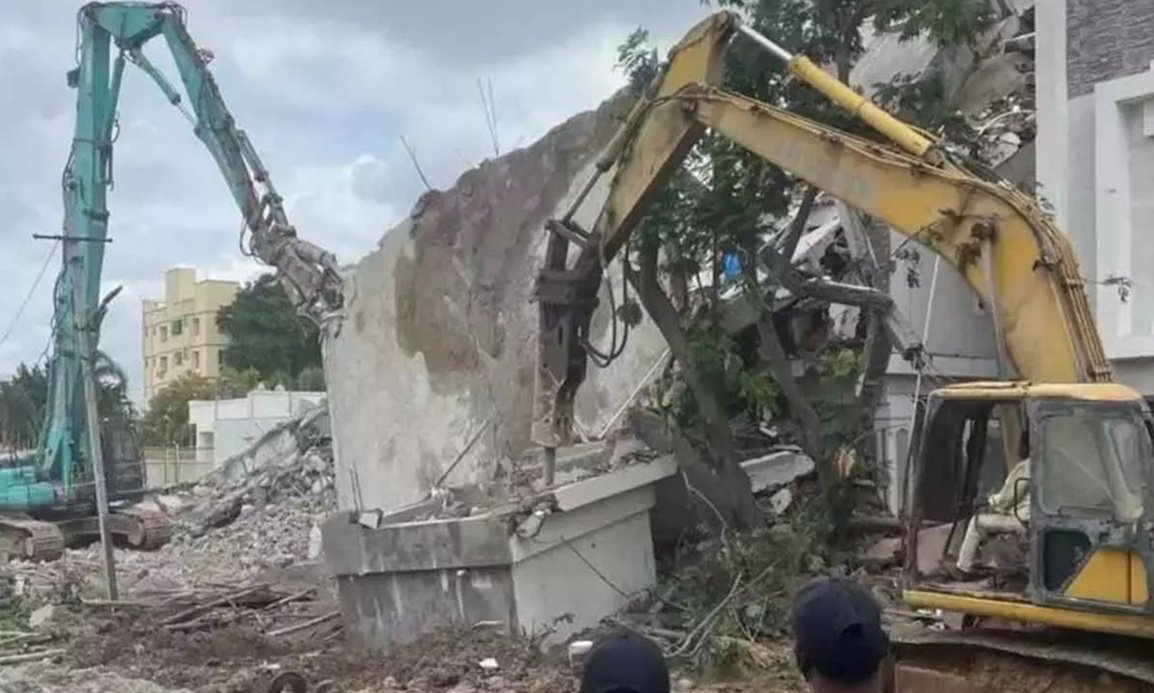
Recently too, HYDRAA stepped in to resolve two long-pending land disputes in Hyderabad by removing illegal encroachments. In Bhavani Nagar Layout, Pocharam, an unauthorised boundary wall built on over 6 acres of privately owned land had blocked access to 88 approved residential plots for nearly eight years. After repeated complaints from the welfare association and a field inquiry confirming the violation, HYDRAA demolished the wall and restored access to the plot owners.
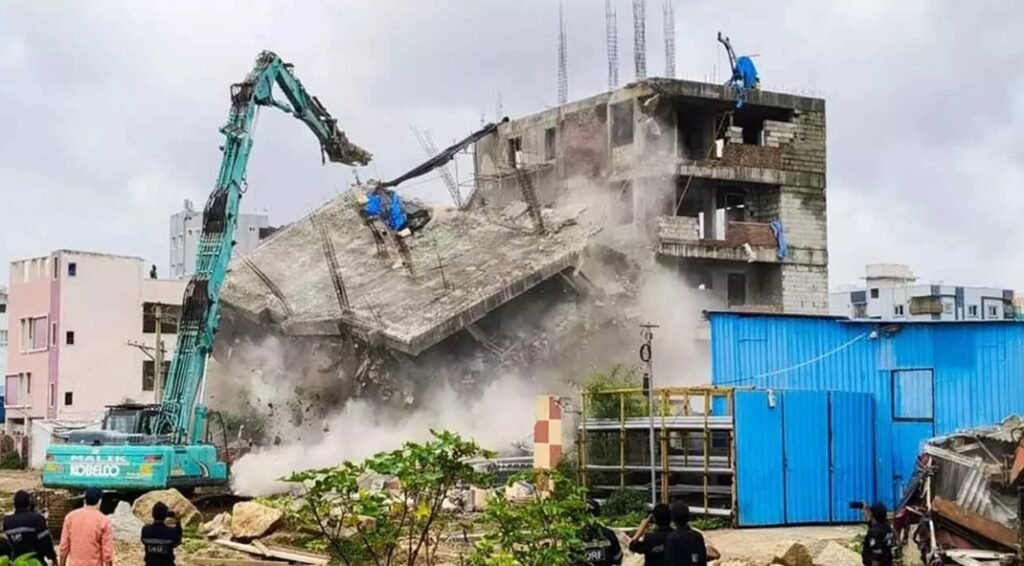
In a separate case in Raghavendra Colony, Serilingampally, officials cleared encroachments on prime 2,000-yard park and community hall land worth nearly Rs. 30 crore that had been falsely assigned a plot number. Since the park space was empty, illegal entrants occupied the space, created new numbers, and made 10 plots with a shed built in each.
In both cases, actions were carried out on the orders of HYDRAA Commissioner A. V. Ranganath, marking strong enforcement against illegal land grabbing and protection of public assets.
Hyderabad, reclaimed: Taking back what was lost
If one were to walk today through the newly cleared stretches of Kondapur or sit on the bank of the newly renovated Bathukamma Kunta and quietly watch the ripples on the water, one might sense a city in mid-transformation — its landscape shifting through reclamation. The cranes elsewhere may be building, but here, the bulldozers are “unbuilding” what should never have been built in the first place.
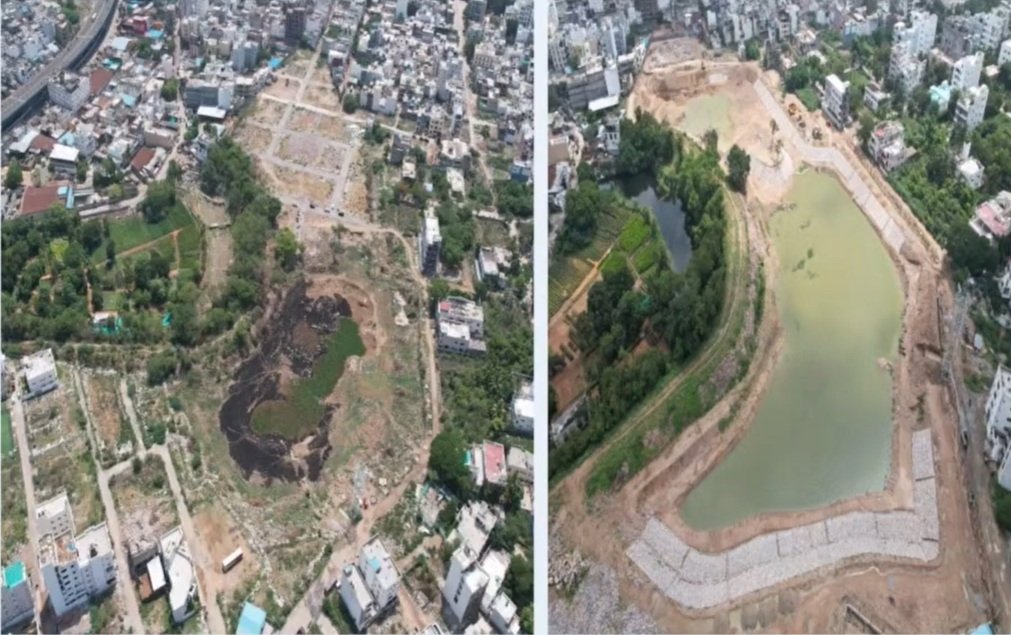
It is tempting to see HYDRAA’s campaign only through the lens of enforcement. But perhaps, it’s also an act of restoring memory. The city now remembers what belonged to everyone and is reclaiming it with quiet determination.
Because sometimes, progress is not about adding more; it’s about taking back what was lost.