
Morning work, silent heroes: Invisible start to a clean city
At 5 AM, the city is still half-asleep. Streetlights hum, tea stalls are just starting their first boil, and most shutters are firmly down. But Hyderabad already has people at work.
“My name is K. Durga. We report for duty at 5 AM, sir,” she says, calm and matter-of-fact, like it’s the most ordinary sentence in the world. She adjusts her cap, checks her gloves, and pulls the mask up before the dust rises. And that is what she does every morning. On the dot. Day after day. Without complaint, without weariness.
For years, Hyderabad has seen sanitation workers as part of the background – like dividers, speed breakers, signboards, shops, and the tar on the roads. To motorists who whiz past them, they are like blurred images in a fast-moving video reel… visible, but not clear. You notice them only when you almost don’t. Unlike the cape-wearing superheroes who swoop in to save the day, these are our city’s silent heroes.
Lately, however, something about the city’s clean-up effort feels more deliberate and more structured. Less like an occasional clean-up photo-op and more like a routine being built.
Small things that make a big difference
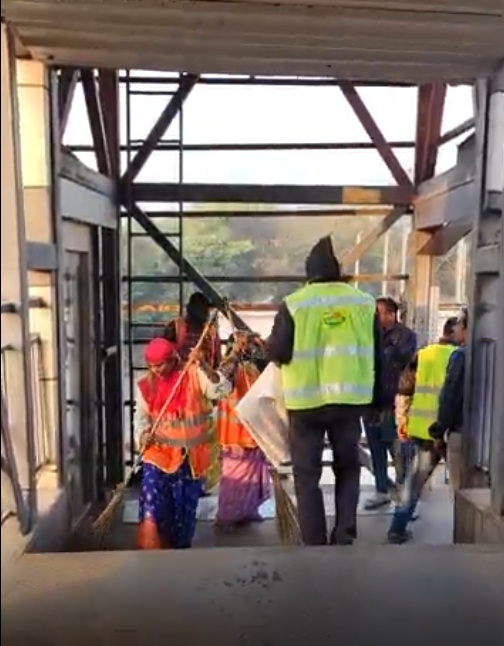
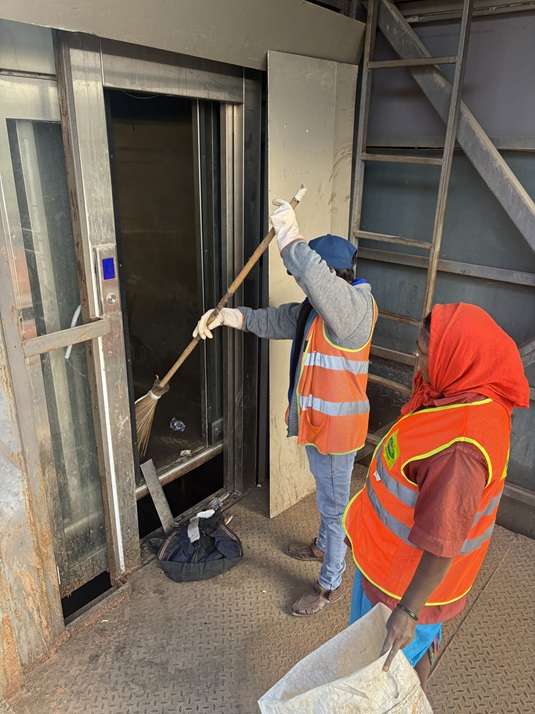
Across the Greater Municipal Hyderabad Corporation (GHMC), sanitation workers have been issued kits – shoes, gloves, masks, jackets – small, practical and useful things that help them get through the day. The jackets are the first thing you notice: reflective radium strips stitched in, meant for the early hours (and late nights) when buses and bikes come flying in without mercy.
“These jackets help keep us safe and visible,” Durga says. “They gave us raincoats for the monsoon and shoes to protect our feet from cracks and dust. I am very, very grateful for all of this.”
It’s not a small thing to be grateful for basic protection. But in a city where workers often run on habit, and hope, small upgrades matter. They not only provide comfort and confidence but also change the equation.
And this timing is not random.
After GHMC’s recent reorganisation and delimitation, the city is now structured into 60 circles, and officials have started looking at sanitation as a starting point, almost as if they’re saying, “ Before we talk about big visions, let’s start with the ground beneath our feet.”
A month-long clean-up & a clear target
One GHMC official, explaining the intent behind the new drive, puts it plainly: “The goal is to clean what has been left behind for too long.
In GHMC language, it’s called “legacy waste” – garbage piled up in corners, under flyovers, beside medians, and around foot overbridges, simply because no one picked it up for days, weeks, sometimes months.
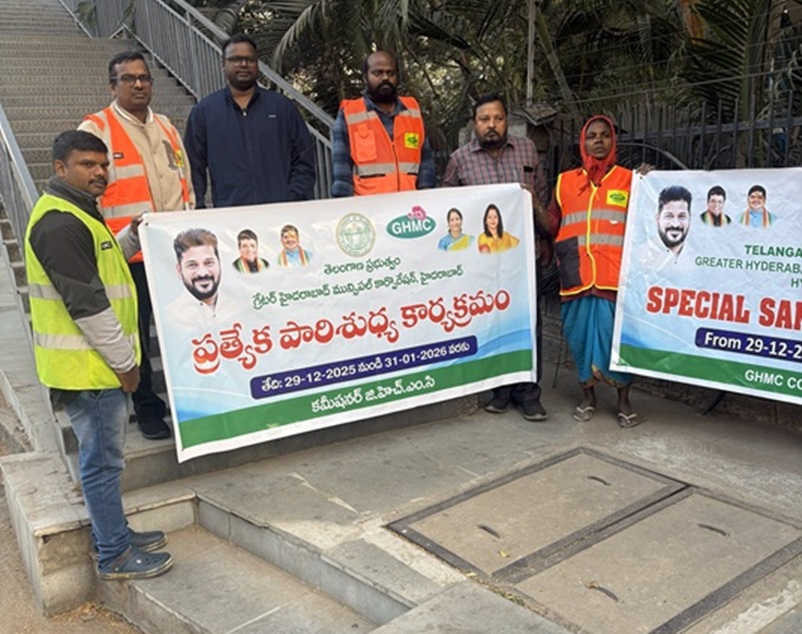
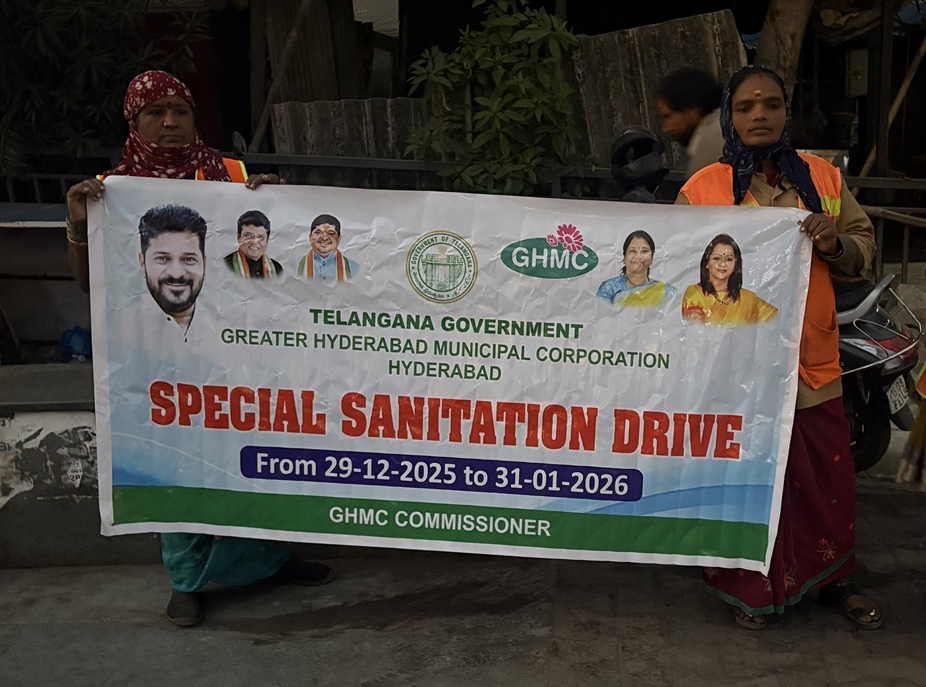
A month-long sanitation drive across GHMC’s 300 wards is focused on removing this legacy waste and also clearing garbage vulnerable points (GVPs), along with debris from construction and demolition sites. The plan includes cleaning flyovers, foot overbridges, roads, parks, footpaths, lakes and nalas.
This surely isn’t glamorous work. It’s not the kind that looks good in a single “before-after” photo. Because the real measure is this: does the same spot stay clean tomorrow morning?
The city wants a clean road. Workers want a clean slate.
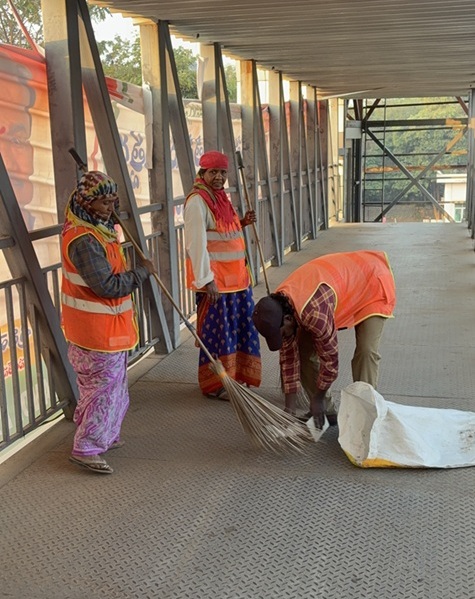
The workers understand time better than anyone.
“Cleaning is best done in the morning, sir,” says Chukka Thirupathi, who has been working since 2021. “In the afternoon, accidents happen and traffic gets jammed. So, doing it in the morning is the right way.”
A woman worker says she has been doing this for 16 years. She doesn’t talk about policies or circles or reorganisation. She says something simpler, something truer.
“Only if the surroundings are clean, we will be clean,” she says.
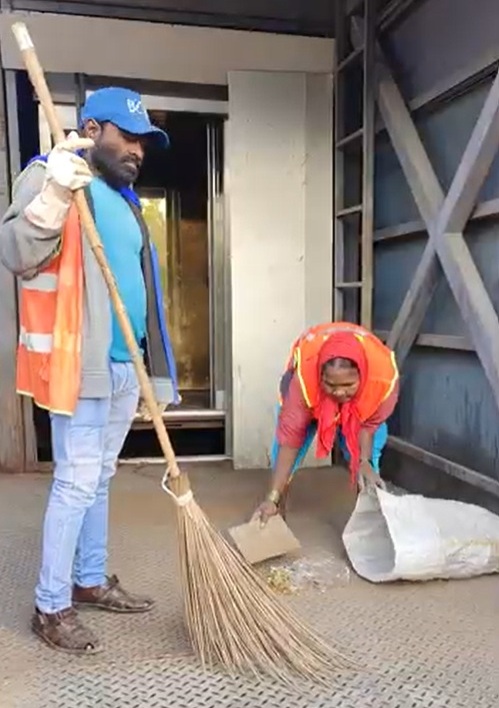
That line stays with you because it flips the usual logic. We talk about cleanliness like it’s a public demand. But for the worker, it is personal. It is health. It is dignity. It is the hope that the city will not undo their morning toil by lunchtime.
And that undoing is real.
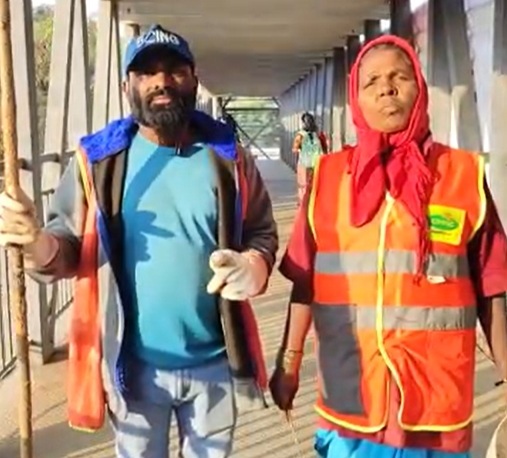
Durga looks straight at the camera and makes a request that doesn’t sound dramatic at all, just tired!
“Please, I request you, do not throw garbage on the roads. The collection vehicle comes daily, so please put the trash in there. We work hard every day, but by the next morning, we find trash on the road again.”
This is the part we rarely admit: the city’s cleanliness is not only GHMC’s responsibility. It is also our daily decision-making, our laziness, our “just one wrapper” attitude.
It’s not just sweeping anymore
There’s another layer to GHMC’s sanitation push: what kind of waste are we even dealing with now?
This month (January 2026), GHMC’s special sanitation drive has expanded beyond the usual garbage pickup into focused collection efforts too. On the first day of its mega e-sanitation drive, GHMC reportedly collected 47 metric tonnes of e-waste, conducting camps across 271 locations with 94 vehicles deployed exclusively for e-waste collection.
At the same time, the broader sanitation drive covered thousands of areas including garbage vulnerable points, foot overbridges, flyovers and parks.
You can read these numbers as administrative achievements. But you can also read them as a sign of how Hyderabad’s waste is changing. It’s not only organic waste and plastic anymore. It’s gadgets, wires, broken electronics – all modern life’s leftovers.
The morning shift ends. The request remains.
By the time the city is fully awake, the workers are already halfway through their route. Their work disappears into the day, like it always has.
But maybe the difference now is that we’re finally being asked to look.
Not at the “clean city” slogan. Not at the perfect Instagram shot of a swept road.
But at the human beings standing in the cold at 5 AM, wearing radium jackets so someone else’s car doesn’t hit them. At the people who clean up after our carelessness and still manage to say, without bitterness:
“We love this work because we are serving the people.”
If GHMC’s new circles are meant to be a fresh start, then the most honest starting point is also the simplest one.
A clean road.
A visible worker.
And a citizen who doesn’t throw the next piece of trash back on the street.